

……A Citizen’s Scorecard of the Second Mutharika Administration
By Senior Citizen of Malawi, Willard Mhone
President Arthur Peter Mutharika returned to State House with a very clear message: Malawi needed rebuilding.
He promised to fight corruption, restore discipline in government, rebuild the economy and improve public services.
As his administration approaches 360 days on 29 September 2026, Malawi should therefore pause—not to celebrate blindly and not to condemn blindly—but to ask one straightforward question:
WHAT HAS BEEN PROMISED, WHAT HAS BEEN DELIVERED, AND WHAT IS STILL WAITING?
This is my 360-Day Civic Scorecard.
- ECONOMIC RECOVERY — PROMISE: STABILISE THE ECONOMY
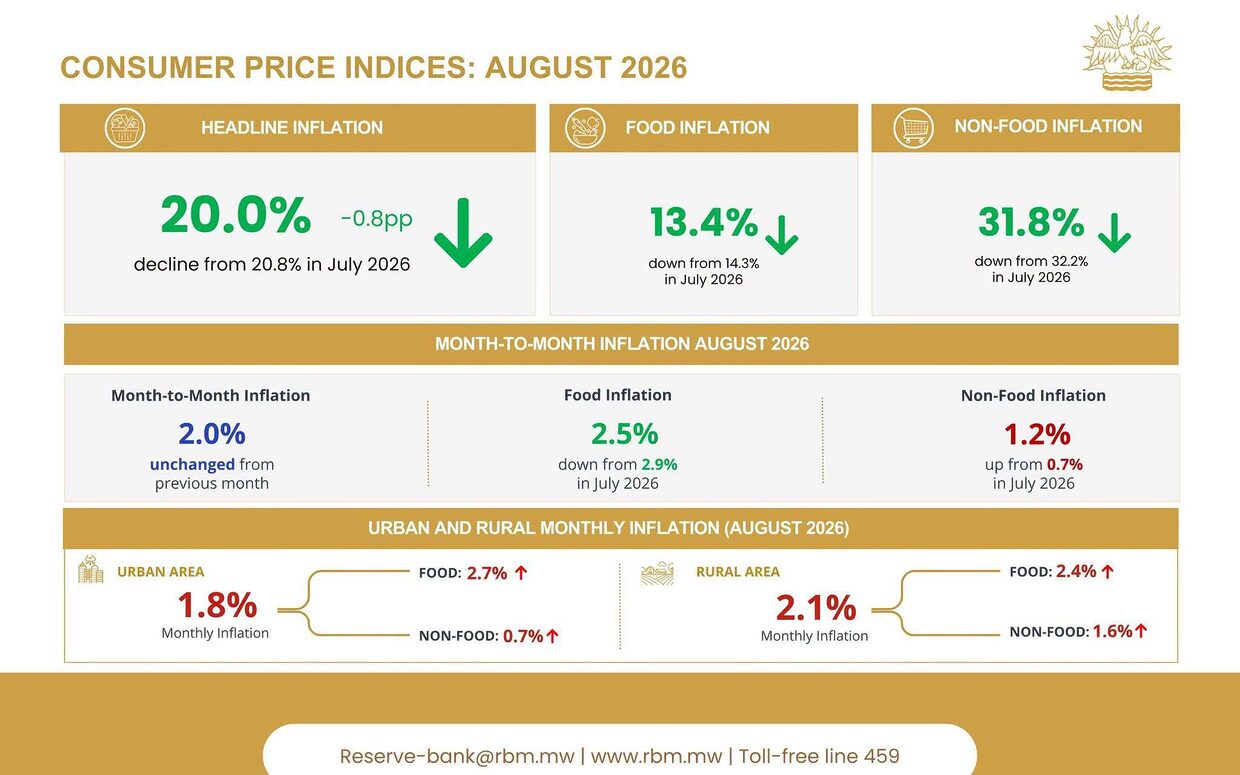
Delivery: Government has made economic stabilisation one of its central priorities, including fiscal discipline and measures around food, fuel, foreign exchange and fertiliser. The President’s 2026 State of the Nation Address reported that inflation, which was 28.7% in September 2025, was projected to fall below 21% during 2026.
But the hard question remains:
Can an ordinary Malawian actually feel that recovery?
Economic recovery cannot be declared from the podium. It must eventually be visible through prices, jobs, income, access to forex, fuel availability and business activity.
- FISCAL DISCIPLINE — A POSITIVE SIGNAL, BUT NOT ENOUGH
One notable decision was the cancellation of government-funded Independence Day celebrations in 2026, with the Presidency saying the measure was part of austerity and prudent management of public resources.
That is a useful signal of restraint.
But citizens must ask a bigger question:
If government can save money by cancelling ceremonies, what is being done about the much larger sources of public waste?
Austerity must go beyond cancelling celebrations.
It must reach procurement, travel, allowances, government contracts, State-Owned Enterprises and inefficient expenditure.
- CORRUPTION — PROMISE: A CLEAN GOVERNMENT
President Mutharika promised to root out corruption and warned public servants and political loyalists against plundering public resources.
This is one area where the public should demand the clearest evidence.
How many corruption investigations have progressed?
How much public money has been recovered?
How many cases have reached conclusion?
Are politically connected people being subjected to the same accountability standards as everyone else?
The President should not be judged by the strength of his anti-corruption speeches.
He should be judged by the strength of the institutions delivering accountability.
- EDUCATION — PROMISE: INVEST IN THE NEXT GENERATION
The administration moved early on its education agenda, including the announcement of the abolition of tuition fees for primary and secondary education from January 2026.
That is a significant policy commitment.
But the real test is now implementation:
Are classrooms adequately staffed?
Are schools receiving the necessary resources Are children actually learning?
Are parents experiencing meaningful relief?
Free education on paper must become quality education in practice.
- AGRICULTURE — THE BIGGEST TEST OF ALL
For Malawi, agriculture is not simply another ministry.
It is the backbone of household survival, food security and rural incomes.
The administration has placed food security and fertiliser among its major priorities.
But here the citizen’s question is simple:
Are Malawian farmers becoming more productive and more profitable?
We need to measure yields, irrigation, markets, farm-gate prices, access to inputs and agricultural exports.
Food security must ultimately be measured in the household—not at a political rally.
- FUEL AND FOREX — THE ACID TEST
Malawi entered this administration with fuel and foreign-exchange shortages among the issues most visible to ordinary citizens.
The government has identified Fuel and Forex as central economic priorities.
But January 2026 brought a major fuel-price shock, with pump prices rising by more than 40%.
This illustrates the difference between managing an economic crisis and solving it.
Government may have legitimate reasons for difficult decisions, but citizens still have the right to ask:
When will the underlying structural problems disappear?
- PUBLIC SERVICES — WHERE IS THE TRANSFORMATION?
The President’s success will ultimately be judged less at Capital Hill and more at:
- hospitals;
- schools;
- police stations;
- water boards;
- ESCOM;
- roads;
- district councils;
- agriculture offices; and
- other public institutions.
The citizen does not live inside a State of the Nation Address.
The citizen lives with the consequences of government decisions every day.
- GOVERNANCE — HAS THE SECOND APM ADMINISTRATION LEARNED FROM THE FIRST?
This is perhaps the most important political question.
President Mutharika has already governed Malawi before.
Therefore, Malawians are entitled to ask:
What has changed because of the lessons of the first administration?
Are institutions stronger?
Is public finance management better?
Is corruption being confronted differently?
Is government more disciplined?
Are public appointments based on competence?
The second administration should not simply be APM 2014–2020 Part Two.
It should demonstrate lessons learned and systems improved.
MY PRELIMINARY CIVIC VERDICT
After examining the first 360 days, I would not describe the record as either an outright success or an outright failure.
There are promises that have moved into action.
There are areas where government has taken difficult decisions.
There are also major problems where citizens are still waiting for tangible results.
That is precisely why this 360-day mark matters.
The President inherited serious economic problems, but after almost one year, inheritance can no longer be the only explanation.
Government has now had time to demonstrate its own direction.
Therefore, my message to President Mutharika is simple:
Mr. President, the promises are no longer enough. The evidence must now speak.
Show Malawians the numbers.
Show us the projects.
Show us the money saved.
Show us the money recovered.
Show us the jobs created.
Show us the agricultural production achieved.
Show us the corruption cases concluded.
Show us the public services improved.
And where government has failed to deliver, tell the nation honestly why.
That is leadership.
And that is accountability.
TO THE MALAWIAN CITIZEN
Let us not become political cheerleaders.
Let us not become permanent critics either.
Let us become watchdogs of our Republic.
When government does something right, acknowledge it.
When government gets something wrong, question it.
When government makes a promise, record it.
When the deadline arrives, ask:
WHERE IS THE DELIVERY?
Because Malawi does not belong to DPP.
Malawi does not belong to MCP.
Malawi does not belong to UTM or any other political party.
MALAWI BELONGS TO MALAWIANS.
And therefore, the ultimate scorecard of any President is not the applause received from political supporters.
It is the improvement—or lack of improvement—in the lives of the people.
360 DAYS OF APM: PROMISES VS DELIVERY.
The citizen is watching.

Leave a Reply