
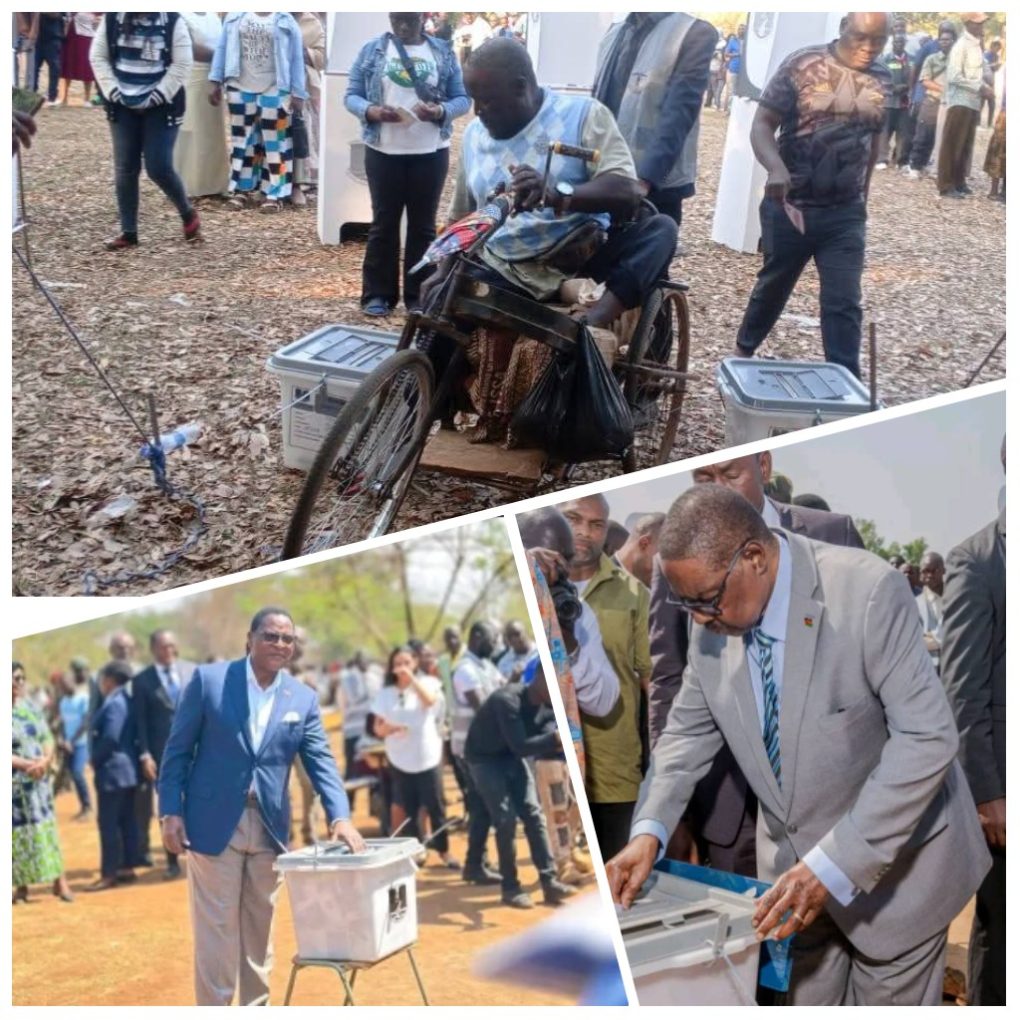


LILONGWE-(MaraviPost)-Malawi today, September 16, 2026, marks one year since millions of Malawians went to the polls in the country’s 2025 General Election, a historic vote that brought former President Peter Mutharika and the Democratic Progressive Party (DPP) back to power after five years in opposition.
The election was held on September 16, 2025, with Malawians voting for the President, 229 members of the National Assembly and 509 local government councillors, according to the Malawi Electoral Commission (MEC).
The election featured 17 presidential candidates, although the presidential contest was largely centred on incumbent President Lazarus Chakwera of the Malawi Congress Party (MCP) and former President Mutharika of the DPP.
The voting took place against a difficult economic backdrop marked by fuel shortages, foreign exchange constraints, high inflation and food insecurity, issues that had become major concerns for households across the country.
On polling day, long queues were reported at several polling centres as voters turned out to participate in an election that was closely watched both within Malawi and internationally.
The final presidential result gave Mutharika 56.8 percent of the valid vote, while Chakwera received 33 percent, according to the summary of the official outcome.
The result marked Mutharika’s return to the presidency after his earlier administration from 2014 to 2020 and followed Chakwera’s victory in the 2020 presidential fresh election.
The election also produced a changed parliamentary landscape, with the DPP winning 77 of the 229 National Assembly seats reported by the end of September, while independent candidates secured 71 and the MCP 53 among the 224 constituencies whose results had been declared at that stage.
Local media reported that 48 women were elected to Parliament, representing 21.14 percent of the National Assembly.
One year later, the 2025 election remains an important reference point in Malawi’s political and democratic development, not only because it changed the presidency but also because it demonstrated the scale of voter participation, the continuing importance of electoral institutions and the political consequences of public concerns over governance and the economy.
The Malawi Electoral Commission has continued its post-election work beyond the announcement of results, including preserving election records and handing polling materials to Parliament as required by law.
The Commission has also conducted subsequent by-elections in 2026, forming part of the continuing electoral cycle following the September 2025 general elections.
As Malawi reflects on September 16, 2025, the anniversary provides an opportunity to look beyond the excitement of election day and examine what has changed politically, economically and institutionally during the first year since voters made their decision at the ballot box.

Leave a Reply