
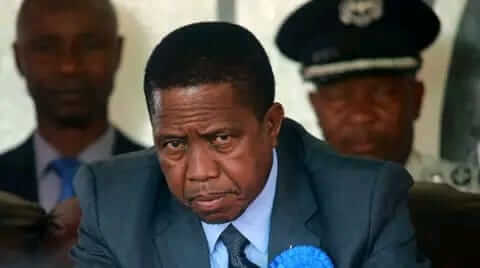
LUSAKA-(MaraviPost)-Zambia’s Parliament has moved to settle one of the country’s most sensitive constitutional questions – who decides where a former President is buried – after a bitter dispute over late former President Edgar Lungu left his remains in a South African mortuary for months and turned a state funeral into a cross-border court battle.
The dispute, which has dominated Zambian headlines and embarrassed the government internationally, is the backdrop to the newly enacted Benefits of Former Presidents and Former Vice-Presidents Act No. 16 of 2026, assented to on 4th June.
Section 8 of the Act now states in unequivocal terms: a former President and former Vice-President who dies while in, or after vacating, office shall be buried at a burial site designated by the Government within the Republic, and the funeral shall be conducted in accordance with State protocols.
That single word “shall” is what legal experts say was missing.
The Lungu Impasse
The ambiguity was brutally exposed when Edgar Chagwa Lungu, Zambia’s sixth President (2015-2021), died on 5th June 2025 at Mediclinic Medforum Hospital in Pretoria, South Africa.
What should have been a moment of national mourning quickly descended into a standoff.
The government of President Hakainde Hichilema announced a state funeral and burial at Embassy Park in Lusaka – the official presidential burial site reserved for former heads of state.
The Lungu family refused. They insisted the former President had left instructions that President Hichilema should not come near his body, and that he did not wish to be buried under the current government’s programme. The family halted repatriation, announced that mourning had ended, and said Lungu would be buried privately in South Africa.
The result: Government vs. Family.
The Zambian state went to the South Gauteng High Court in Johannesburg seeking to stop the private burial and compel repatriation of the body to Zambia. The court granted an interdict, halting the funeral just hours before it was due to take place. Lungu’s remains have remained preserved at a Johannesburg funeral parlour since then as legal arguments over jurisdiction, family wishes, culture, and public interest continue.
For a country that prides itself on peaceful transitions, the images of lawyers arguing over a former President’s body in a foreign court painted Zambia in bad light, analysts say.
Picture this, as one Lusaka lawyer put it: A former President dies.
Government says: “Bring the body home. State funeral. Embassy Park.”
The family says: “Not so fast.”
Repatriation is stopped. And a funeral becomes a court case in another country.
That was the Edgar Lungu saga.
Zambia had wrestled with part of this question before. In People v Secretary to the Cabinet, Ex parte Kaweche Kaunda (HP 768 of 2021), concerning the funeral of founding President Dr Kenneth Kaunda, the High Court described a state funeral as a public funeral governed by State protocol meant to honour a person of national significance, and observed that even where personal wishes point in another direction, public interest may in an appropriate case prevail.
Good principle, but there was no clear statutory rule codifying it.
Parliament Writes It Down
The 2026 Act now provides it.
The law repeals and replaces the 1993 Act, and for the first time extends retirement benefits to former Vice-Presidents who served since 1964, though without retrospective pay.
But it is Section 8 – Funeral benefits – that closes the Lungu loophole.
- A former President or Vice-President shall be buried at a Government-designated site within Zambia.
- The funeral shall be conducted in accordance with State protocols as may be prescribed.
- The deceased shall be provided with funeral benefits as prescribed.
In addition, Section 10 makes the benefits a charge on the Consolidated Fund, while Section 9 clarifies that a former Vice-President who later becomes President only qualifies for presidential benefits.
The government says the aim is welfare, not politics. At the signing ceremony, President Hichilema cited the need to provide for former Vice-Presidents such as Dr. Guy Scott, Lt-Gen Malimba Masheke, Dr. Nevers Mumba – who recently resigned from active politics to comply with the Act’s bar on active political engagement – former Vice-President Inonge Wina and Col. Godfrey Miyanda.
But observers agree the burial clause was politically urgent.
“The beauty of the new provision is not merely that it tells us what happens after the death of a former President. It tells us before the next death,” one constitutional commentator said.
“The next time, the country should not have to start another episode of Government: ‘This is the programme.’ Family: ‘We have our own programme.’ Lawyers: ‘Let us go to court.’ And somewhere in the background somebody is asking – ‘So ba body is where?’”
For international readers unfamiliar with Embassy Park, the presidential burial site next to Cabinet Office in Lusaka has become the symbol of national honour. Every President from Frederick Chiluba to Kenneth Kaunda is interred there. Lungu’s family’s rejection of it was seen as the ultimate political rupture.
Under the new law, that personal rejection would no longer have legal force. The State decides.
As Zambia waits for the South African courts to finally determine the fate of Lungu’s remains, Parliament has made sure the next funeral will be just that – a funeral, not a lawsuit.

Leave a Reply