
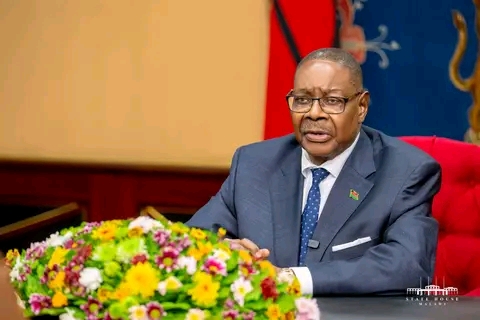

BLANTYRE-(MaraviPost)-One year after assuming office, President Professor Arthur Peter Mutharika has moved to reset Malawi’s development trajectory with a string of decisive actions that government says are already delivering tangible results to Malawians.
From stabilizing the economy to rebuilding institutions and putting money in councils, the Mutharika administration says its first 12 months have been about laying a solid foundation for transformation.
Central to the first year has been economic stabilization.
Government reports that inflation has been brought down through fiscal discipline and close coordination with the Reserve Bank of Malawi.
To address forex shortages that crippled businesses last year, new allocation mechanisms were introduced for fuel, fertilizer and essential medicines.
The administration has also advanced talks with the IMF and creditors on debt restructuring aimed at freeing up resources for development.
In agriculture, the flagship Affordable Inputs Programme was restructured to reach 1.5 million genuine smallholder farmers with inputs delivered on time.
Government also launched mega-farm projects for wheat, soya and macadamia as part of an export drive to reduce the country’s food import bill.
New trade missions to the UAE, China and the EU have opened fresh markets for tobacco, legumes and macadamia, officials say.
On infrastructure, the Roads Authority accelerated rehabilitation works on the M1 and several district roads across the country.
In energy, government signed Power Purchase Agreements for over 300MW of solar and hydro power to ease blackouts, and cleared ESCOM arrears to independent power producers.
Ten districts also benefited from new rural water supply projects ahead of the rainy season.
In governance, the administration launched a civil service audit and payroll cleanup that removed ghost workers and saved billions.
The Anti-Corruption Bureau was given additional funding to strengthen operations.
Decentralization was also prioritized with the disbursement of K8 billion in equalization grants to all 35 councils in August 2026.
The Ministry of Local Government operationalized the Infrastructure Services Unit and Performance Improvement Support Unit to fast-track project design, supervision and monitoring.
Social services also saw major movement. Government rolled out the free secondary education policy and recruited 4,500 new teachers to reduce class sizes.
In health, a 12-month supply of essential medicines and ARVs was secured and rehabilitation of district hospitals commenced.
On disaster management, District Civil Protection Committees were strengthened and new mechanisms put in place for faster release of emergency funds.
Government communicators contrast this pace of delivery with the previous MCP administration under Dr. Lazarus Chakwera, which they fault for policy inconsistency, delays in project implementation, and failure to fully devolve resources and powers to councils.
According to officials, the last government left behind a bloated payroll, stalled infrastructure projects, and weak disaster response systems that the current administration has had to fix within one year.
With the National Decentralisation Strategy 2026-2036 now validated and digital revenue collection scaled to 15 councils, State House says the focus in year two will be on asset devolution, full fiscal autonomy for councils, and zero tolerance to corruption.
As President Mutharika marks one year in office, the message is that Malawi has moved from talk to action.
Leave a Reply