
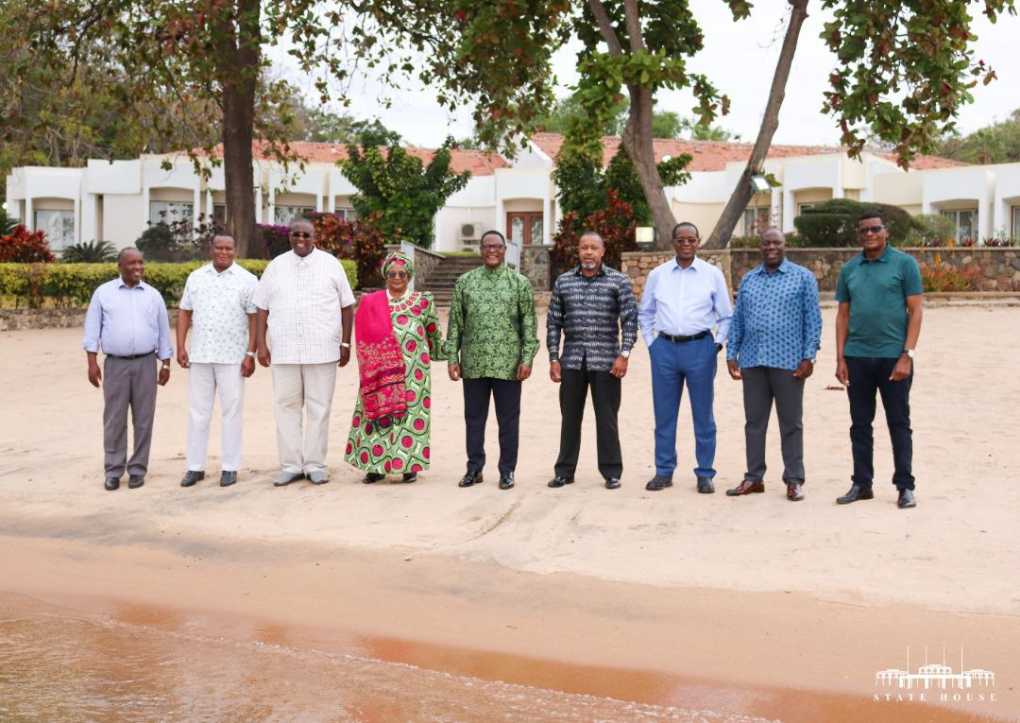

LILONGWE-(MaraviPost)-The United Transformation Movement’s response to the Malawi Congress Party’s apology over the collapse of the Tonse Alliance has reopened a political question Malawi cannot afford to bury: was the 2020 coalition genuinely a partnership of equals, or was it ultimately an electoral arrangement whose promises became secondary once power was secured?
UTM spokesperson Felix Njawala says his party has heard MCP’s apology but that forgiveness must first be discussed internally within UTM.
That response is significant because it moves the debate beyond political courtesy and back to the substance of the agreement that brought Lazarus Chakwera and Saulos Chilima to power.
The original MCP-UTM agreement is particularly important because it did not describe the two parties merely as temporary campaign partners.
It explicitly stated that MCP and UTM entered the arrangement as equal partners.
It also contained specific provisions on government formation, including Cabinet responsibilities and the Vice-President’s portfolios.
The agreement stated that, subject to consultation and agreement between the President and Vice-President, the Vice-President would hold at least the Finance, Public Service and Agriculture portfolios.
That makes UTM’s current complaint about Finance and Agriculture more than a matter of political memory.
There is documentary evidence that these responsibilities were contemplated in the agreement.
But this is precisely where the debate must become more sophisticated.
A signed political agreement is not automatically self-executing.
The real question is how the parties interpreted, implemented and enforced its provisions once they moved from opposition into government.
That is where the Tonse experiment appears to have broken down.
The coalition was born out of a powerful political calculation.
MCP had the organisational strength and Lazarus Chakwera had already emerged as a major opposition presidential contender.
UTM, meanwhile, had Saulos Chilima, who had demonstrated significant electoral appeal and had finished third in the 2019 presidential election.
Bringing the two forces together created a formidable opposition coalition.
The strategy succeeded in the 2020 fresh presidential election.
Chakwera defeated Peter Mutharika and MCP returned to government after 26 years.
But electoral success created a new obligation.
The coalition had to evolve from a mechanism for defeating an incumbent into a credible system for governing together.
That transformation was never convincingly completed.
The fundamental weakness of Tonse was therefore not that the parties disagreed.
Disagreement is normal in a coalition government.
The problem was that the alliance appears to have lacked sufficient political trust and effective mechanisms for managing those disagreements before they became existential.
The agreement itself anticipated this problem.
It provided for negotiation, mediation and conciliation, followed, if necessary, by arbitration involving three people, including a retired judge and a member of the clergy.
The agreement further stated that an arbitration decision would be final and binding.
Yet when UTM announced its withdrawal in July 2024, questions immediately emerged about whether those mechanisms had been exhausted.
Contemporary reporting showed that UTM cited its grievances and dissatisfaction with how the alliance had been managed, while legal commentators questioned whether the contractual dispute-resolution process had been followed.
This creates an uncomfortable reality for both parties.
MCP cannot simply say UTM abandoned the alliance.
UTM cannot simply say MCP breached the agreement and leave the contractual questions unanswered.
Both sides had obligations under a political agreement that contained procedures for resolving disputes.
The failure to use those mechanisms fully may itself be one of the greatest lessons of the Tonse experience.
Political parties often sign elaborate agreements during election campaigns and then discover that political power changes the meaning of those agreements.
Opposition parties may negotiate as equals.
Once one party occupies the presidency, however, the distribution of real power becomes fundamentally unequal.
That is where institutional safeguards become essential.
If MCP controlled the presidency while UTM controlled the vice-presidency, the alliance needed regular consultations, transparent decision-making and predictable power-sharing arrangements.
Without those safeguards, the phrase “equal partners” could remain impressive on paper while becoming weaker in practice.
UTM’s complaint that it was denied an expected role in the later leadership of the alliance also deserves careful treatment.
There has been a long-running dispute over what exactly the political arrangement meant for the subsequent electoral cycle.
UTM maintained that it expected to lead the alliance after the first term, while MCP representatives and other political actors offered different interpretations of the agreement.
The disagreement itself demonstrates the problem.
If two principal coalition partners could reach radically different understandings of such a fundamental issue, the original political settlement was not sufficiently clear or sufficiently protected against competing interpretations.
That ambiguity was politically expensive.
It became more damaging after Chilima’s death in June 2024.
UTM subsequently announced its withdrawal from Tonse, with Njawala citing concerns about communication and the future of the party after the death of its president.
The withdrawal was formally announced in July 2024.
It would therefore be too simplistic to argue that Chilima’s death caused the Tonse collapse.
His death accelerated an already troubled relationship.
The alliance was already experiencing questions about communication, power-sharing and political direction.
Chilima’s absence simply removed the personality around whom UTM’s political leverage had been concentrated.
The subsequent hostility between the parties confirms that the wounds were deeper than an ordinary electoral disagreement.
In May 2026, UTM excluded MCP leadership from a memorial event for Chilima, with Njawala saying the relationship remained sensitive and that emotions surrounding the former vice-president were still strong.
The Times Group subsequently reported that political analysts regarded the continuing MCP-UTM rift as evidence of deep-seated mistrust dating from the breakdown of Tonse.
Against that background, MCP’s apology is potentially important.
An apology can be the beginning of political reconciliation.
But it can also become a convenient substitute for accountability if it is not followed by specific explanations.
MCP should therefore welcome UTM’s response rather than resent it.
UTM is entitled to deliberate before deciding whether an apology is sufficient.
Forgiveness cannot be demanded simply because one political party has finally acknowledged mistakes.
At the same time, UTM should also resist turning the apology into an opportunity for permanent political grievance.
If reconciliation is genuinely desired, UTM must eventually explain what it believes was breached, what evidence supports its interpretation and what remedy it considers appropriate.
The objective should not be to determine which party can win the argument on social media.
The objective should be to establish what went wrong and prevent the same mistakes from being repeated.
This matters far beyond MCP and UTM.
Malawi’s political system is increasingly characterised by coalition-building, shifting alliances and personality-driven parties.
The 2025 election demonstrated the consequences of fragmented opposition politics after Tonse collapsed.
The European Union Election Observation Mission noted that the demise of Tonse contributed to a fragmented opposition landscape, with many parties choosing to contest separately.
The mission also described Malawi’s party system as marked by weak internal party democracy, personality-driven politics and limited ideological differentiation.
That assessment should concern every major political party.
A democracy cannot depend indefinitely on leaders making private promises and then interpreting those promises differently once they acquire power.
Coalition agreements should be treated as political institutions, not campaign souvenirs.
They should specify who does what, when decisions must be made, how disagreements are resolved and what happens when the partners disagree fundamentally.
They should also contain mechanisms for public accountability.
If the Tonse agreement had clearer procedures for succession, coalition leadership and enforcement, the later dispute might have been easier to resolve.
The bigger failure, therefore, was not necessarily the existence of Tonse.
It was the failure to build enough institutional trust around it.
MCP must accept that an apology will have limited meaning if it does not accompany organisational reflection.
The party should explain what it believes went wrong and what it would do differently in a future coalition.
UTM must do the same.
It should acknowledge that leaving the alliance also had consequences and that political agreements require both sides to respect their formal dispute-resolution procedures.
The collapse of Tonse was not only a story of betrayal.
It was also a story of inadequate institutionalisation.
The coalition proved that Malawian opposition parties can overcome historical rivalries to win national power.
But it also demonstrated how quickly that achievement can unravel when political trust becomes weaker than personal and partisan interests.
The 2025 election provided the final electoral evidence.
MCP lost power, while the opposition remained fragmented.
The EU election mission concluded that the demise of Tonse contributed to this fragmented political environment.
That should be the real warning for 2030.
If MCP wants another coalition, it must first become a more predictable coalition partner.
If UTM wants another coalition, it must also become a more institutionally disciplined partner.
Neither party should enter negotiations with assumptions that are not written clearly into a binding agreement.
Neither should expect political goodwill to replace enforcement mechanisms.
And neither should confuse an electoral alliance with a permanent marriage.
The strongest lesson from Tonse is therefore not that coalition politics does not work.
It is that coalition politics without institutional trust does not work for long.
MCP’s apology has opened a door.
UTM has not yet decided whether to walk through it.
The wisest course for both parties would be to replace accusation with documentation, political memory with institutional lessons and resentment with negotiated clarity.
Malawi does not need another Tonse Alliance built around ambitious personalities and vague expectations.
It needs political partnerships in which promises are written clearly, responsibilities are shared fairly, disputes are resolved institutionally and voters can hold every partner accountable.
That is the standard MCP should now accept.
It is also the standard UTM should accept.
The question before both parties is no longer who betrayed whom.
The more important question is whether they have learned enough from the failure to avoid betraying the democratic expectations of Malawians again.

Leave a Reply