


Therefore, since we have so great a cloud of witnesses surrounding us, let us also lay aside every encumbrance and the sin that so easily entangles us, and let us run with endurance the race that is set before us…. Hebrews 12:1
You may write me down in history | With your bitter, twisted lies, |You may trod me in the very dirt | But still, like dust, I’ll rise. Maya Angelou
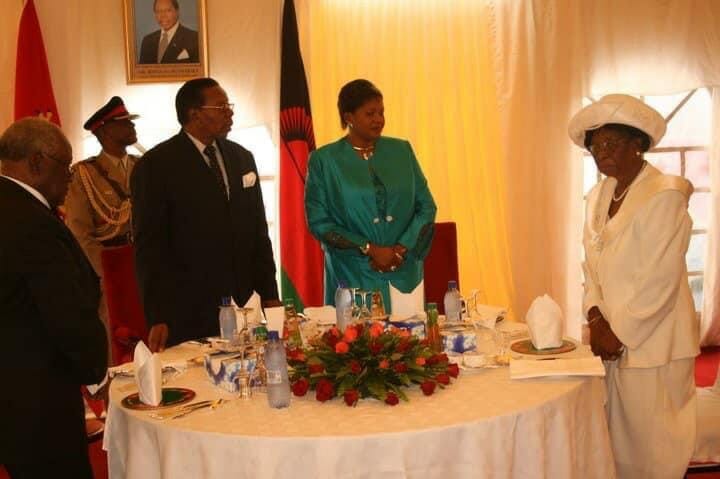
Malawi last week celebrated the 59th anniversary of independence. Happy 59th and here is looking forward to a splendid entry onto the 6th floor, celebrating the 60th anniversary of independent status. Last week, a journey of celebrating our leaders was started. Below is the carpet rollout celebration of our five leaders, one of whom was the first woman president, and the second in Africa, Joyce Banda.
The former presidents are, namely Kamuzu Banda, Bakili Muluzi, Bingu wa Mutharika, Joyce Banda, Peter Mutharika, and incumbent President Lazarus Chakwera.
1. Kamuzu Banda – I was 8 years old when Banda came into my life, due to his employing my father (first as interpreter, then as High Commissioner in the UK, Ambassador/Permanent Representative at the UN, Ambassador in Ethiopia), Kamuzu became a second father to me, my brothers, and sisters since decisions my father made, were due to advice the former president gave my him during his diplomatic career. One such piece of advice was securing houses with a large Jewish population (the Jews normally establish good schools). But I also appreciate Banda for employing former government official hostess, Mama C. Tamanda Kadzamira. Truth be told, historians must credit her for the smooth transition Malawi made from single-party to multi-party governance. A good learner, Kadzamira’s input into Banda’s last decisions, was through the reminding that even he admitted was getting from her. (Mama has just reminded me…”)
Lastly, Kamuzu is credited for most of the development achievements we see in Malawi, most articulated through his “When I was in Gweru, I had three dreams” statements in his speeches. He added a fourth in 1981 with the establishment of the Kamuzu Academy. The institution, among others, introduced classical learning to Malawi secondary schools. Cogito, ergo sum (Translation: “I think, therefore I am”) and etc.
2. Bakili Muluzi – For 31 years, Malawians were on a diet of monotone verbiage from the palace that was the lone voice of the strongman Kamuzu, who took no nonsense from anyone in or outside Malawi. Muluzi is to be saluted for making the transition Malawians made to listen to other voices, multiple voices; some confusing, some giving Malawians the opportunity to show their flair at all things pertaining to our humanity. Muluzi made Malawi re-join the international and African platforms, allowing Malawians to be outward looking. Muluzi showed Malawians that the head of state is human (he loves to dance, give and receive jokes), and the need to have friends (both the good and the bad, international and national – he was my father’s friend). Muluzi was magnanimous in accepting that he as head of state can make mistakes; he is on record to have changed course. He also acknowledged the strengths of other Malawians, both in private and behind closed doors.
I appreciate former president Muluzi for agreeing to meet me and BBC anchor, Veronique Edwards, soon after his election victory in 1994. Veronique and I were the first journalists to meet with the new president (thanks to UDF SG Harry Thompson).
3. Bingu wa Mutharika – Of all the six Malawi, wa Mutharika is credited for playing Kamuzu’s card that Malawi is predominantly an agricultural country, and when its people are given the tools and means, can produce food in abundance to feed themselves and sell. By giving every Malawian (rich or poor) fertilizer subsidy through the Farm Input Subsidy Programme, Malawi’s fortunes turned around so well that the country once again became a food basket. Such a turnaround led to Malawi giving food aid to Zambia, Zimbabwe, and Haiti; Malawi also sold surplus maize to South Africa. (Director of the New York–based Earth Institute at Columbia University, Jeffrey Sachs, who has worked closely with Malawian authorities to fight poverty, is among persons that recognize this about wa Mutharika. “We should … remember a positive legacy of the late president Mutharika because that legacy holds a key for Africa’s future development and escape from poverty,” Sachs wrote in an op-ed in the New York Times.) — Malawi: From food basket to a basket case – How did it happen? – The Africa Report.com.
Mutharika too, showed Malawians his human side; when he heard of my parents celebrating their 60th wedding anniversary, he threw a party for them, inviting 100 from his side, and asked me to invite 100 people from my side. Remembering his past, Mutharika told the invited guests at the Sanjika Palace party, that he too, was at my parents’ August 12, 1950 wedding in Blantyre. But wa Mutharika’s extensive footprint in Malawian hearts should be that he selected a woman (of valor, distinction, and international recognition) to be his running mate in the 2009 presidential elections.
4. Joyce Banda – Joyce Hilda Banda, is a strong, assertive, and like her two predecessors, had a great footprint in the international arena having won the coveted Hunger Project 1997 Award for the Sustainable End to Hunger in Africa, when wa Mutharika chose her as his running mate. A well-calculated move by Bingu, Banda’s name on his ticket, brought women to the voting booth in their largest numbers, earning him a landslide victory. But Banda, upon becoming president made inroads into history, flying around Africa looking for aid. She got a resounding reception in Nigeria, Liberia, South Africa (remember them?), Zambia, and Lesotho. Banda received international recognition and was flown from one capital to the next including to London to meet with Queen Elizabeth II. Pictures of the two show great mirth and excitement with each other: one was the longest-serving female monarch (70 years), and the other was the first female president in what used to be part of her British empire. Former president Banda was also the first woman to ascend to the SADC chairperson position.
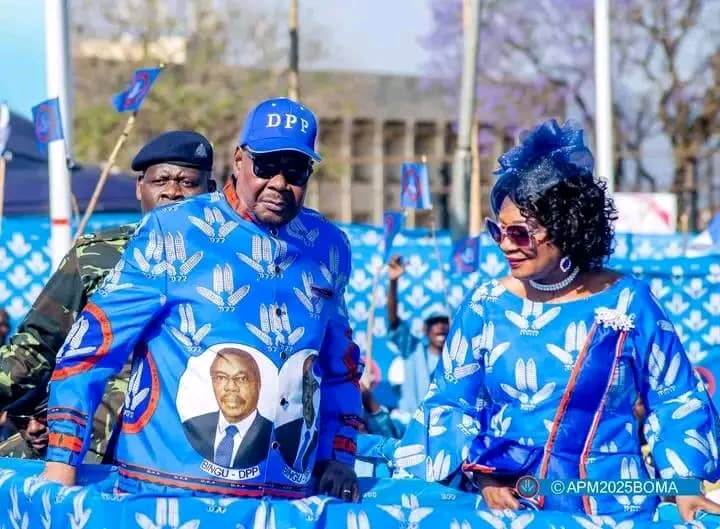
5. Peter Mutharika – Mutharika II (also known as APM), was equally a giant by the time he became president in 2014. He was the chair of the Constitutional Conference (during Muluzi’s presidency), bringing in two scores of experience as a college law professor in the US. His footprint is all over the Constitution and has been often used in determining legal matters. There are many things that APM can be remembered for (like bringing to the country the astute, quiet Vice President Saulos Chilima). But looming big and large was AMP accepting that his 2019 Presidential reelection victory was marred and furthermore accepting the 5-panel Constitutional Court’s decision that determined the errors of the flawed elections, who directed for the Fresh 2020 presidential elections. This is huge in the political hemisphere.
APM could have refused to accept the ConCourt’s decision, and he could have done, as head of state numerous things, but he didn’t. History must acknowledge such magnanimity.
6. Lazarus Chakwera – Then enter theologian Lazarus Chakwera, former general superintendent of the Assembly of God Church in Malawi. He entered the political arena having admitted in a television interview that he struggled with God on the call to enter politics. Chakwera narrowly lost to Mutharika in the 2019 elections; however, when his fellow candidate Chilima (he was third in the poll) took Peter Mutharika to court on the anomalies (aptly called “madando” by former MEC chair Jane Ansah), Chakwera joined the court challenge, giving Malawians and the world the result that comes when we unite.
From the eagle eye’s view, Malawi has since two joined hands to run on a single ticket and further joined by seven more political parties, the Tonse Alliance has been pitted against massive internal but mostly external challenges. The picture must capture every Malawian, to see President Chakwera welcome his Tanzanian counterpart at the celebrations, to see the Vice President escort the Tanzanian leader to the Kamuzu Banda Mausoleum.
The fact that Malawi still stands, that Chakwera is still at the Kamuzu Palace, the Chilima is still vice president, and that we can still celebrate our independent status, is the country’s testimony that we are a resilient people, a united people, proud of our history, bent of reaching the mountain top of national success, against all the odds scattered in our path.
The fact that Malawi still stands (59 years strong), that Chakwera is still at the Palace as president, that Chilima is still vice president, and that we can still celebrate our independent status from British colonial rule, is the country’s sweet testimony that we are a resilient people, a united people, proud of our heritage, and we are bent on reaching the mountaintop of national success, against all the odds of malevolent, malicious, wicked, vindictive, and spiteful distractions scattered along our path.
To Malawi, my Malawi, the message is, put on your visors, continue working hard for the sake of the country, and “Do not be afraid. Stand firm and you will see the deliverance the Lord will bring you today. The enemy you see today, you will never see again. Exodus 14:13b.
