




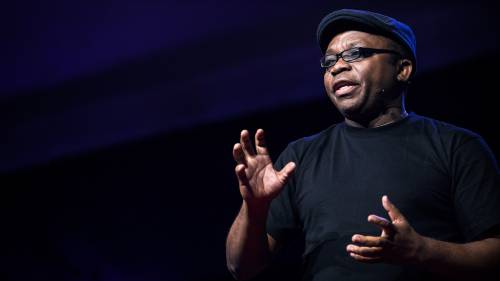

By Leo Igwe
When I die, I would want to be given a humanist funeral. I do not want a religious funeral service because such a ceremony is not consistent with my life stance. I believe that when people die, they should be buried in line with the principles and values that guided their lives. It is a dishonor to do otherwise. I have made this position known to my family and I hope they will respect it. I am reinforcing this position by making it public and will back it up by stating this proposition in my will. From my experiences, I do not trust religious family members when it comes to funeral matters. In cases where they tolerate their humanist family members while they are alive, they suddenly become very hostile to the humanist stance as soon as they die. They foist religious service on their irreligious relatives. This trend must change.
In my case, any service linked to my burial or internment should be secular. I state this to avoid any confusion or ambiguity. I make this declaration to prevent a religious hijack of my funeral. Family members should not organize a religious funeral for me. They should not.Humanists are usually in the minority, but that should not be a reason to deny them a funeral ceremony in line with their outlook. Humanists come from families that are predominantly religious, and from societies where the religious will is imposed on them. Humanists come from families that usually do not respect their will or wishes after they pass away. Simply put, humanists come from communities where religious believers treat them with contempt and often hijack their funerals.
Religious family members act in bad faith. They take joy and glory in burying non-theists in a theistic way. Pious family members give flimsy excuses for dishonoring the memory of irreligious relatives. In some cases, they feign ignorance and claim to not know about any secular, non-religious funeral services. In some cases, religious family members said that humanist relatives had a death bed conversion; that is, he or she embraced God or accepted Jesus as their personal Lord and savior while on the sickbed.
They use the death bed conversion to shut out humanists and ensure that a family member is buried religiously. In a particular case in Kogi state, the born-again Christian wife of a humanist friend did not contact the humanist community when the husband passed. She went ahead and organized a Christian funeral ceremony for him. She claimed that the husband embraced Christianity shortly before he passed away.In another case in Rivers state, the family was divided over the issue of humanist ceremony. The wife and children acknowledged that their late husband and father was a humanist. They wanted a nonreligious funeral ceremony for him. Meanwhile, some Christian family members vehemently refused. They threatened to violently resist any humanist funeral ceremony. At the end of the day, the family head brokered a compromise. A humanist ceremony was performed while the body was lying in state. And some pastors performed a religious service at the graveside.
But the denial of secular funerals is not always the fault of religious family members.
In many cases, some humanist colleagues leave the funeral option open. They do not explicitly state the kind of funeral they want in their will. They do not make it categorically clear to the family members not to organize religious funerals for them. They leave it to families to decide the funeral to organize. This trend has to change because it leads to unnecessary friction and confrontation at a time people should be grieving and mourning. It puts the humanist community in an awkward position. In a particular case, some people accused humanists of interfering in what was a ‘family’ affair. They forgot that the humanist community was a family too. In fact somebody once stated that humanists were trying ‘to grieve more than the bereaved’. He made it seem as if the humanist community was not among the bereaved.Look, I want to avoid this confusion. Hence I am taking several steps to ensure that my funeral will be humanist and secular. My funeral should officially be without any religious and superstitious baggage that often encumbers mourning and grieving in communities. I want a secular/humanist celebrant, not a religious cleric, to preside over my funeral. The humanist officiant would liaise with my family to put together a funeral program, a non theistic celebration of life. Religious friends and relatives can attend and participate, including my former colleagues and students who are priests and nuns. They could be allowed to offer some words of prayer, but that should be silently done somewhere close to the end of the service. Death is a landmark for every human being. So it is pertinent that at the end of life, all human beings, whether they are religious or not, humanists or not, be given funeral ceremonies that reflect the outlook which they professed when they were alive.
Leo Igwe is a humanist and campaigns for religious/belief equality in Africa.
