
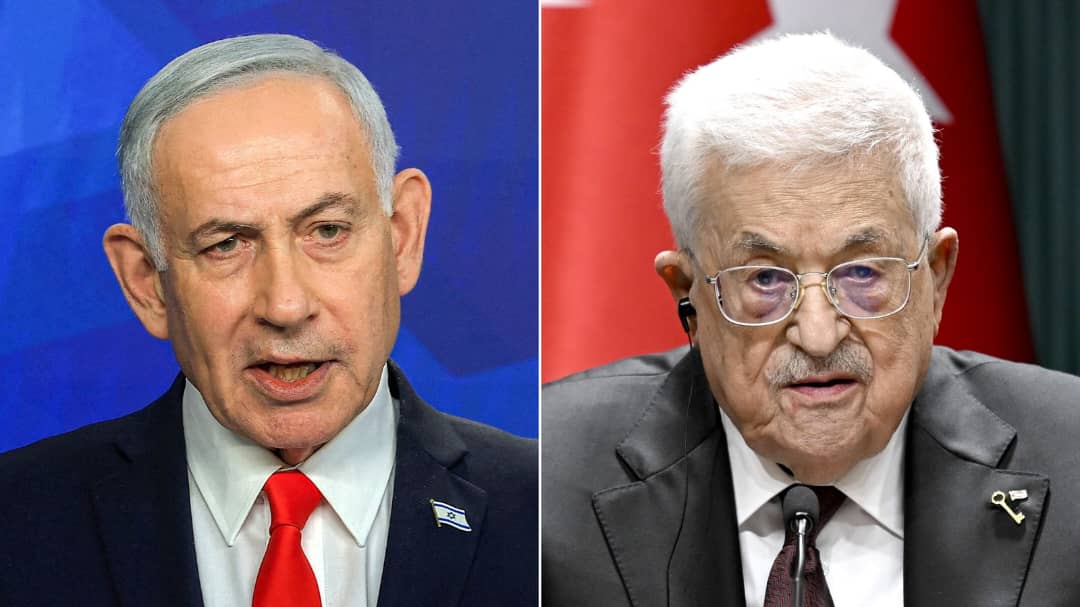

NEW YORK-(MaraviPost)-Israeli Prime Minister Benjamin Netanyahu has defended Israel’s military campaign while sharply attacking Iran during his address to the 81st United Nations General Assembly.
Palestinian Authority President Mahmoud Abbas, meanwhile, called for international action over the war in Gaza.
International media reports, including CNN, Reuters and The Washington Post, say Netanyahu’s address triggered a divided response, with a large number of diplomats leaving the UN chamber as he took the podium, while supporters applauded.
The speech came amid continuing international criticism of Israel’s military operations in Gaza and growing tensions across the Middle East.
Netanyahu accused Iran of posing a serious threat and claimed that without Israel’s military action against Tehran, “we’d all be dead.”
He also said the fall of Iran’s government was “only a matter of time” and predicted that the Iranian people would eventually be free.
The Israeli prime minister also renewed his criticism of New York Mayor Zohran Mamdani, accusing him of antisemitism and of distorting facts about Israel.
Mamdani rejected the accusations, saying Netanyahu had used his UN speech to repeat what he described as false claims about the war in Gaza.
Meanwhile, Abbas addressed the General Assembly through a pre-recorded video after the United States denied him a visa to attend the meeting in person.
The Palestinian leader urged the international community to hold Israel accountable and called for the implementation of a stalled 20-point ceasefire proposal for Gaza.
Abbas said Palestinians were facing one of the most dangerous periods in their history after years of war.
He also called for renewed international efforts to preserve the possibility of a two-state solution.
Abbas described the US visa decision as an unlawful punitive measure.
He argued that denying the Palestinian delegation access to the UN headquarters violated US obligations as the host country.
Away from the Gaza debate, Iran said it had presented Washington with a proposal aimed at reopening the strategically important Strait of Hormuz.
The proposal also seeks to restart negotiations towards what Iranian Foreign Minister Abbas Araghchi called a “final deal.”
According to Araghchi, the proposal was delivered through mediators.
Tehran wants Washington to meet certain conditions before negotiations resume and the strait is reopened.
The proposal reportedly builds on issues contained in the June Islamabad memorandum, including sanctions relief, the release of frozen Iranian assets and an end to military operations covered by the understanding.
A White House official said the United States was engaged in “positive and constructive discussions” through mediators.
Washington, however, indicated that it was not under immediate pressure to accept Tehran’s proposal.
The Strait of Hormuz remains a major international concern because of its importance to global energy supplies.
At the same UN gathering, Yemen’s Vice President Abdullah al-Alimi Bawazir called for greater protection of the Bab al-Mandeb Strait.
He also warned against what he described as unreliable commitments from Houthi forces.
French President Emmanuel Macron announced plans to deploy military personnel, radars and defence systems to help protect Saudi Arabia’s Yanbu energy export facility following a recent Houthi attack.
Meanwhile, Kremlin envoy Kirill Dmitriev met US President Donald Trump’s representatives Steve Witkoff and Jared Kushner in New York.
The meeting focused on US-Russia relations and efforts towards a peaceful resolution to the Ukraine conflict.
The third day of the General Assembly was marked by sharp divisions over Gaza and Iran.
It also featured renewed diplomatic efforts concerning the Middle East, global energy routes and the war in Ukraine.
Leave a Reply