
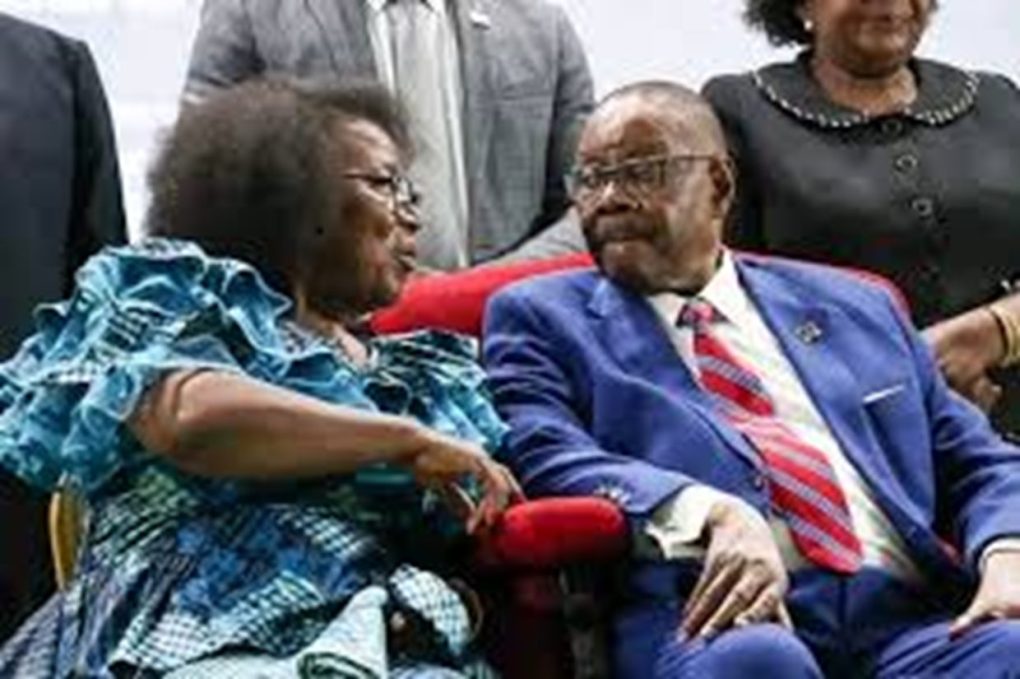


HARARE-(MaraviPost)-Renowned Zimbabwean investigative journalist Hopewell Chin’ono says the reported rift between President Peter Mutharika and his deputy, Jane Ansah, is now taking a toll on how government is being run.
Posting on his social media handle, Chin’ono — a multi-award winning African journalist — said what began as a cold relationship between the two has now broken down completely, and it is shaping how power is being exercised at the very top of the Malawian government.
He was reacting to a story on Malawi’s failure to send a presidential-level delegation to the third Russia-Africa Summit, a move seen as having raised questions over the country’s diplomatic priorities and its response to the recruitment of young Africans into Russia’s war against Ukraine.
Political and human rights campaigners have criticised the government’s absence from the 28-29 October summit, arguing that Malawi missed an opportunity to press Moscow over deceptive recruitment schemes targeting African youths.
Authorities have justified the decision by pointing to President Mutharika’s private visit to South Africa. However, campaigners argue that a cabinet minister could have represented Malawi at the high-level meeting.
“It is because of the rift between Mutharika and his vice president, Jane Ansah.
“I can authoritatively report that the two no longer talk at all.
“What began as a cold relationship has now broken down completely, and it is shaping how power is being exercised at the very top of the Malawian government,” said Chin’ono.
BACKGROUND: A FAMILIAR PATTERN
The tension Chin’ono describes did not emerge overnight.
Mutharika and Ansah were elected together on the same Democratic Progressive Party (DPP) ticket in the 16 September 2025 General Election, barely a year ago. Ansah, a retired Justice of Appeal and former chairperson of the Malawi Electoral Commission, was Mutharika’s surprise choice as running mate.
Initial optimism around the partnership has since given way to highly publicised friction.
In January 2026, key portfolios previously under Ansah’s oversight — the Department of Disaster Management Affairs (DoDMA) and the public sector reforms portfolio — were withdrawn from her and transferred to the Office of the President and Cabinet (OPC) on 10 January 2026.
Ansah has also complained publicly of being excluded from Cabinet meetings and denied Cabinet papers, and of being bypassed for major national engagements. The August 2026 SADC Summit, for example, was attended by Second Vice-President Enock Chihana in her place.
In a September 2026 interview, Ansah herself said her relationship with Mutharika remained cordial, but that some officials in the governing elite were sidelining her.
The Consumers Association of Malawi (CAMA) has since weighed in. In a letter dated 27 October 2026, CAMA executive director John Kapito urged Mutharika to end what it described as the systematic sidelining of Ansah, warning that it could weaken effective leadership at a time of serious economic challenges.
CAMA reminded the President that the vice-presidency is created by Section 79 of the Malawi Constitution and is not a post filled at the President’s discretion, noting that voters elected Mutharika and Ansah jointly.
The pattern is not new in Malawi. Former presidents have clashed with deputies including Justin Malewezi, Cassim Chilumpha, Joyce Banda, and the late Saulos Chilima — who fell out with Mutharika during his first term before later running against him.
THE SUMMIT THAT EXPOSED THE RIFT
The third Russia-Africa Summit, held in Moscow on 28-29 October and co-chaired by Russian President Vladimir Putin and Burundi’s President Évariste Ndayishimiye, drew delegations from 48 of Africa’s 54 countries, with 22 represented by heads of state.
Malawi was not among them at presidential level. The government has yet to publicly explain who represented the country, what proposals were tabled, or what benefits were expected.
Campaigners had wanted Malawi to use the summit to confront Moscow over reports that young African women and youths were being recruited through the Alabuga Special Economic Zone into work linked to the production of military drones used in the war against Ukraine. Reports in November 2025 alleged Malawian girls were among those recruited, and in August 2026, Minister of Homeland Security Peter Mukhito expressed concern after reports that four Malawian youths had become trapped in Russian war-related industries.
The rift between Malawian Mutharika and First Vice-President Ansah which is long documented is a breakdown in their working relationship, barely a year after they were elected together on the same Democratic Progressive Party ticket in September 2025.
Ansah, a retired judge and former chair of the Malawi Electoral Commission, was Mutharika’s surprise running mate. Early optimism has since collapsed into distrust and isolation.
The turning point came on 10 January 2026, when key portfolios under Ansah — the Department of Disaster Management Affairs and Public Sector Reforms — were withdrawn and moved to the Office of the President and Cabinet. She has also complained of being excluded from Cabinet meetings, denied Cabinet papers, and bypassed for major national engagements.
In August 2026, Second Vice-President Enock Chihana, not Ansah, represented Malawi at the SADC Summit in South Africa. The move was read as a public demotion.
In September 2026, Ansah said her relationship with Mutharika remained cordial, but accused officials around him of sidelining her. The presidency has not explained the reduced role.
The dispute has wider consequences. It was linked to Malawi’s failure to send a presidential-level delegation to the third Russia-Africa Summit in Moscow on 28-29 October 2026, where critics say the country missed a chance to confront Moscow over deceptive recruitment of African youths into war-linked work.
In October 2026, the Consumers Association of Malawi urged Mutharika to restore Ansah’s duties, warning that the sidelining weakened leadership during economic hardship. It cited Section 79 of the Constitution, noting the vice-presidency is an elected office, not a presidential favour.
The row follows a long Malawi pattern. Previous presidents clashed with deputies Justin Malewezi, Cassim Chilumpha, Joyce Banda and the late Saulos Chilima. No vice-president has succeeded an outgoing president through a planned transition.
For now, the two reportedly no longer talk, and governance at the top is split.

Leave a Reply