



By Comrade Jumbe
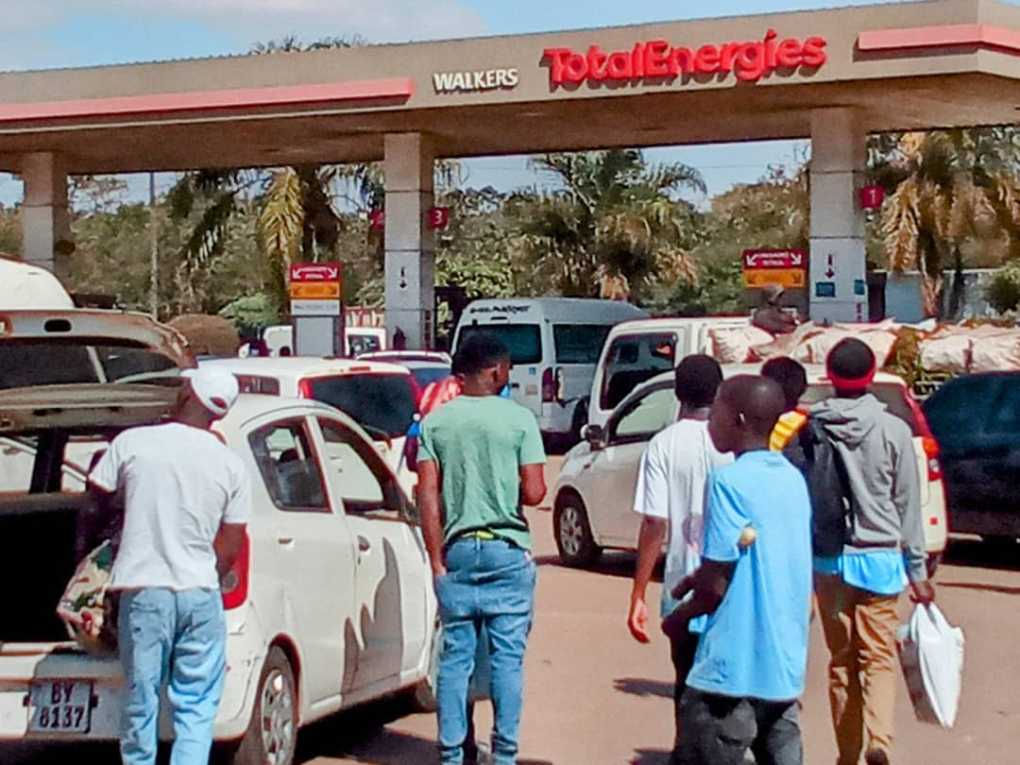
Fuel shortages should never become a permanent feature of our national economy.
A country cannot achieve meaningful economic growth, industrial development, or sustainable prosperity when the supply of fuel remains uncertain.
Fuel is the engine that drives our economy.
It powers our industries, moves our agricultural produce, facilitates trade, supports businesses, and keeps our transport systems running.
When fuel becomes scarce, the entire nation feels the consequences.
I strongly believe that we need a comprehensive, practical, and sustainable approach to ending recurring fuel shortages.
We must move beyond temporary interventions and develop a system that guarantees a consistent, reliable, and affordable supply of fuel.
I therefore propose a 10-POINT PLAN TO RESCUE OUR COUNTRY FROM FUEL SHORTAGES,
Iam combining both short-term interventions and long-term strategic solutions.
In this first instalment, I present five key proposals:
- Reintroduce the Government-to-Government (G2G) Fuel Procurement System and Empower Youth-Led Importation Initiatives
2
We must reconsider and strengthen the Government-to-Government (G2G) fuel procurement arrangement as one of the mechanisms for securing a reliable supply of fuel.
However, government should not limit participation to state institutions alone.
It should also deliberately empower organised groups of young people by providing them with financial support, access to financing, and the necessary institutional framework to participate in fuel importation.
This would achieve two important objectives:
strengthening national fuel security while creating meaningful economic opportunities for young people.
Our youth must not merely be spectators in the economy; they must become active participants in strategic sectors of national development.
- Ensure Continuous Fuel Importation Throughout the Year
Fuel importation must be a continuous and well-coordinated process, not an emergency response activated only when shortages begin to emerge.
We need a properly structured importation programme that guarantees a steady flow of fuel throughout the year.
Government and relevant stakeholders must develop reliable procurement schedules, strengthen supply agreements, and ensure that adequate volumes are secured in advance.
The country must adopt a proactive approach rather than waiting for fuel stocks to run dangerously low before taking action.
Prevention is always better than crisis management.
- Establish Strategic Fuel Reserves in Almost Every District
One of the major weaknesses in fuel security is the absence of sufficient strategic storage infrastructure across the country.
We need to establish fuel reserve facilities in almost every district to ensure that fuel is readily accessible, even when there are disruptions in the national supply chain.
This decentralised storage system would reduce overdependence on a few major distribution points, improve regional supply security, and enable faster responses to emergencies.
Fuel reserves are not simply storage facilities; they are an investment in national economic security.
- Strengthen Cooperation with African Crude Oil-Producing Countries and Develop Our Own Refineries
Africa is richly endowed with natural resources, including crude oil.
We must begin looking beyond our borders and build stronger strategic partnerships with African countries that produce crude oil.
Our government should engage these countries and explore mutually beneficial arrangements that can guarantee a more reliable supply of crude oil.
More importantly, we must initiate serious discussions with African governments and strategic investors on how we can establish reliable domestic refineries.
We cannot continue depending excessively on imported refined petroleum products when there are opportunities to build our own refining capacity.
Developing domestic refineries would strengthen our energy independence, create employment, stimulate industrial growth, and reduce our vulnerability to international supply disruptions.
Our long-term ambition must be to move from being heavily dependent on imported fuel to becoming a country with the capacity to refine and supply its own petroleum products.
- Increase National Production to Generate Adequate Foreign Exchange
We cannot discuss fuel security without addressing the country’s foreign exchange generation capacity.
Fuel imports require foreign currency.
Therefore, if we want to guarantee a consistent supply of fuel, we must strengthen the productive sectors of our economy and increase our capacity to generate foreign exchange.
We must enhance investing in agriculture, mining, manufacturing, tourism, exports, and other productive industries.
The more foreign exchange we generate, the stronger our ability to meet international fuel procurement obligations.
A productive economy is the foundation of a secure fuel supply.
We must therefore understand that solving fuel shortages is not just about importing more fuel; it is also about building an economy capable of sustaining those imports.
THIS IS ONLY THE BEGINNING: FIVE MORE POINTS TO COME!
In my next article, I will present the remaining five proposals, focusing on additional practical interventions and long-term strategies that can help us build a more resilient, reliable, and sustainable fuel supply system.
Our country deserves better than recurring fuel shortages.
Our businesses deserve certainty, our industries deserve uninterrupted operations, our citizens deserve reliable services, and our economy deserves a sustainable energy strategy.
We must stop treating fuel shortages as normal.
We must start treating fuel security as a national priority.
The solutions are possible.
What we need is political will, strategic planning, investment, accountability, and the courage to implement lasting reforms.
Together we will build this nation

Leave a Reply