
By Martin MBEWE
Before the sun rises over many villages across Malawi, many families are already awake.
A mother wraps her sick child on her back and begins the journey to the nearest health centre, hoping the distance and poor roads will not delay her. Elsewhere, a farmer looks at bags of rice after months of hard work, wondering how much of the harvest’s value will remain after the costs of getting it to market are deducted.
Their stories are different, but the obstacle is the same: distance from opportunity. And distance, in Malawi, is rarely just about kilometres. It is about what stands between a person and the chance to succeed.
It is also important to appreciate that these moments rarely appear in national development reports. But they are the moments that determine whether development is real.
In Malawi’s case, these moments tell us that opportunity does not reach everyone at the same speed because, simply put, the road to opportunity is not the same for everyone.
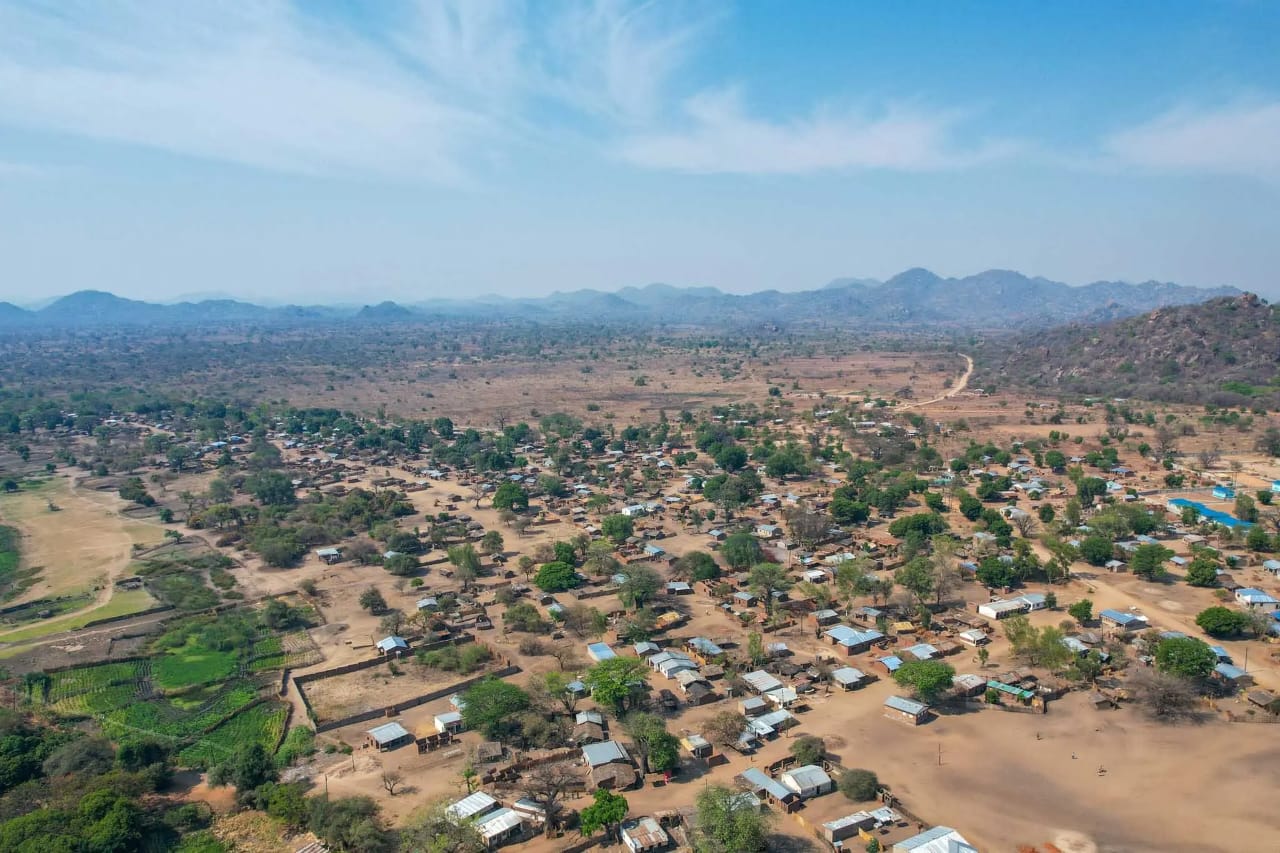
Leave the Capital Lilongwe and travel into rural communities. The tarmac gives way to rough roads.
A short journey on a map can become a serious problem when a mother needs medical care or a farmer needs to sell produce. They cultivate fields, run businesses and educate their children.
But geography can decide how far those dreams can travel. The issue, therefore, is not only how far people live from services, it is whether the connection to those services holds- through flooding, wear and tear and the quiet neglect that turns a road into a rut and a bridge into a risk.
I was reminded of this recently when I travelled to Nkhotakota District and visited Mtaya, where rice farming supports many families.
One man I spoke to explained how poor roads affect his rice business. “We grow a lot of rice here, but when the roads are bad, it becomes very difficult to take our rice to the market. Sometimes transport is too expensive and buyers do not want to come here. You can work hard all season and still fail to get the money you expected.”
Read that again. He is not complaining about the soil, the rain, or even his own hands. He is describing a system that takes his effort and discounts it, not because he failed, but because the road infrastructure failed him.
The problem was not a lack of hard work; he had planted, waited and produced the rice. His problem was getting it to market at a cost he could afford.
I also spoke with a girl from the same area. Her worry was about school. During the rainy season, poor bridges make some routes unsafe. “When the rains come, some bridges become difficult to cross. Sometimes we are afraid to go to school because the water is too much. You may want to go to school, but you cannot get there safely,” she said.
What happens when one missed school day accumulates into a couple of missed school weeks every rainy season? A child falls behind, drops out and another generation is lost.
The same story repeats across Malawi, in places where the names change but the obstacle does not.
In 2025, communities around the Namapanga River in Neno District struggled to reach schools, hospitals and markets because of a narrow wooden bridge. Idesi Saidi of Chikalema village recalled nearly falling into the river when a motorcycle tried to pass her. The crossing also made it harder for farmers to reach markets.
These stories show why rural development is not a side issue; most Malawians live outside major urban centres and when basic infrastructure fails, the effects reach the whole country.
Malawi has made progress that should be acknowledged. In 2024, electricity access reached 25.9% of the population, with nearly two million people gaining access through the Malawi Electricity Access Project. This is inclusive of solar solutions.
Yet, the gap remains wide: 56.5% of urban households have access to the national grid, compared with only 3.8% of rural households. Off-grid solar is helping, but reliable power for businesses remains a challenge. That difference is not only about having a light bulb but about what someone can do with that light.
A child can study after sunset. A shop can stay open. A welding business can operate. A maize mill can serve a community.
Some may argue that Malawi cannot afford to build good roads to every remote village. That is a fair concern. Public money is limited. However, priorities should not mean leaving communities behind. They should focus on roads and bridges that connect people to schools, health facilities and markets, and ensure that they are maintained and safe to use at all times.
There are examples of what focused investment can achieve. The government and development partners have improved more than 1,000 kilometres of rural roads and connected 74 trading centres in Malawi.
The next step is to make such investment work harder. The government and councils could support reliable last-mile transport, development partners could invest in solar-powered service hubs and businesses could help farmers organise collection and storage points closer to where crops are produced.
There is also hope in what Malawians are doing. The government has provided K5 billion per constituency under the 2026/27 Constituency Development Fund.
This is an opportunity to address local problems, but the money must reach the projects that matter and, just as important, must be used carefully.
Individual Malawians are also playing their part. Musician Patience Namadingo is an example. In Wataka village in Machinga, he completed a school project with support from other well-wishers, helping improve the learning environment and bring electricity to the school.
Malawians are hardworking. That much is clear. We have proved that for generations. It is whether our systems give that hard work a fair chance to succeed.
A farmer in Mtaya should look at a good rice harvest with hope, not worry about whether a truck will reach the village and a child should prepare for school without wondering whether they will be able to safely cross a bridge.
These issues may look small from a national budget perspective, but for the people living in areas with poor infrastructure, access to these “everyday utilities and services” will determine if they will realise the day’s opportunities or not.
The question is not whether we want opportunity to reach everyone. The question is whether we are willing to build the bridges literally and figuratively to get there.
The writer is Development Communications Specialist based in Lilongwe, Malawi.

Leave a Reply