
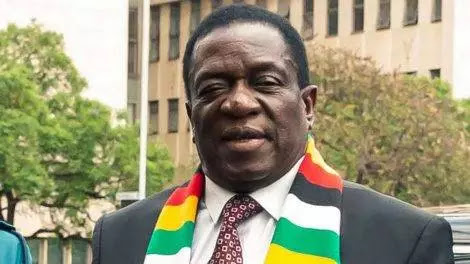


HARARE-(MaraviPost)-Zimbabwe’s Cabinet has approved the principles of the General Laws Amendment Bill, 2026 — the next legal hammer blow in the drive to entrench President Emmerson Mnangagwa’s extended rule and rewrite the country’s democratic architecture from the inside out.
On paper, government calls it alignment. In reality, it is the systematic dismantling of the 2013 Constitution’s checks and balances, law by law, institution by institution.
Speaking during post cabinet briefing this afternoon, Minister of Home Affairs and Cultural Heritage in Zimbabwe Kazembe Kazembe said Cabinet considered and approved the principles this week, clearing the way for Parliament to amend every Act affected by the Constitution of Zimbabwe Amendment (No.3) Act of 2026.
That amendment, signed into law by Mnangagwa on 7 July 2026, lengthened presidential, parliamentary and local authority terms from five to seven years and ended the direct election of the president. It moved the next general election from 2028 to 2030 and extended Mnangagwa’s current term by two years.
The General Laws Amendment Bill will now give full legal effect to that overhaul.
It will amend laws on the registration of voters, the structure and leadership of the superior courts, the jurisdiction of the Constitutional Court, the qualifications for appointment to the Office of Attorney-General, the appointment of the Prosecutor-General, the functions of the Defence Forces and of the Zimbabwe Human Rights Commission, and the tenure of office of members of the Council of Chiefs.
It will also repeal the National Peace and Reconciliation Commission Act, after its constitutionally-provided 10-year period expired on 22 August 2023.
Government says prompt alignment will ensure legal certainty, uphold the supremacy of the Constitution and strengthen the rule of law.
Critics say the opposite is happening: the law is being used to legalise power, not to limit it.
The Power Shift Behind The Technical Language
The Bill is not a routine clean-up exercise. It is part of a wider programme to amend about 12 Acts of Parliament over the next two years to align existing laws with Amendment No.3.
Among the most consequential changes already baked into that amendment are:
- Voter registration moving from the independent Zimbabwe Electoral Commission to the Registrar-General, a government department.
- The President gaining power to appoint 10 additional senators, increasing the Senate from 80 to 90 seats.
- Judges to be appointed by the President after consultation with the Judicial Service Commission, without the previous public interview process.
- The Judicial Service Commission removed from the appointment of the Prosecutor-General, with the President assuming responsibility for the appointment.
Taken together, critics argue, the changes concentrate control over elections, the courts, prosecution and Parliament in the presidency — the very office whose term has just been extended.
A Constitution Amended Without The People
The central legal fight is whether a Parliament elected for five years can vote itself — and the President — two extra years in office without going back to voters in a referendum.
Section 328(7) of the Constitution says an amendment to a term-limit provision which extends how long a person may hold office does not apply to anyone who held that office before the amendment.
Opposition MPs, war veterans, lawyers and civil society groups argue that provision alone should have blocked Mnangagwa from benefiting.
ZANU-PF argues the referendum requirement does not apply, and that the changes reflect the will of the people as expressed through the party’s conferences, which adopted Resolution Number 1 directing implementation.
Human Rights Watch has said the amendment effectively keeps Mnangagwa in office for an additional two years and postpones the 2028 elections until 2030, after civil society groups raised concerns that it was an attack on democracy.
Courts Still To Decide
The legal battle is far from over.
The Constitutional Court has reserved judgment in one challenge and postponed two others, with further applications arguing that the abolition of direct presidential elections required a referendum still pending.
Yet Cabinet is pressing ahead anyway — legislating as if the courts have already spoken.
That is the hard truth at the heart of this Bill: while judges deliberate on whether Amendment No.3 is constitutional, the government is already building the entire legal edifice on top of it.
If the courts strike it down, the whole structure collapses. If they uphold it, Zimbabwe will have completed one of the most far-reaching reversals of democratic reform in Southern Africa — without a single citizen casting a vote for it.
The question now is no longer whether Mnangagwa will stay until 2030.
It is whether Zimbabweans will ever again directly elect their president.

Leave a Reply