
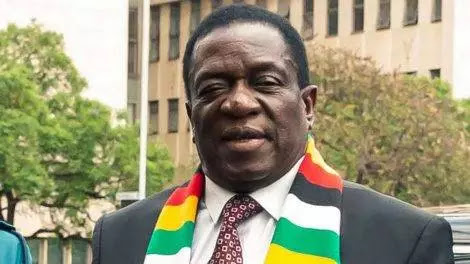


LILONGWE-(MalawiPost)-The Democratic Progressive Party (DPP) has strongly defended President Peter Mutharika against calls by the Public Affairs Committee (PAC) for greater transparency over his health and ability to discharge presidential responsibilities.
The governing party insists that Mutharika’s democratic mandate, secured through the September 16, 2025 general election, must be respected, arguing that concerns about his health or ability to perform presidential duties cannot, on their own, constitute proof of constitutional incapacity.
The party maintains that any formal determination of presidential incapacity must strictly follow the procedures established under the Constitution of Malawi.
In an official statement signed by DPP Secretary General Peter Mukhito, the party argued that the President’s advanced age, reduced public appearances and absence from certain national engagements do not automatically establish that he is constitutionally incapable of performing his duties.
The DPP maintained that electoral legitimacy cannot be casually questioned on the basis of public speculation, political disagreements or concerns arising from the President’s limited visibility.
The party’s response comes amid growing public debate over Mutharika’s health, his prolonged absence from some public engagements and government communication surrounding his recent private visit to South Africa.
PAC has demanded that the President deliver a live national address to personally clarify his health condition and reassure Malawians about his ability to continue exercising executive authority.
The quasi-religious organisation argues that conflicting government explanations and the absence of direct communication from the Head of State have created an information vacuum that is deepening public uncertainty.
The controversy has also brought renewed attention to Section 87 of the Constitution of Malawi, which provides a legal framework for determining whether a sitting President is incapacitated and unable to discharge the responsibilities of the office.
Under Section 87(1), the First Vice-President is required to act as President whenever the President is incapacitated to the extent that he or she cannot perform the duties of the office.
Section 87(2) further establishes a procedure for formally determining presidential incapacity through a written declaration supported by a board of independent medical practitioners, the First Vice-President and a majority of Cabinet, before submission to the Speaker of the National Assembly.
This constitutional provision distinguishes public concerns about a President’s health from the formal legal determination of presidential incapacity.
On the position of First Vice-President Dr Jane Mayemu Ansah, the DPP challenged PAC to identify specific constitutional provisions that have allegedly been violated, arguing that the Vice-President exercises powers provided for under the Constitution and responsibilities delegated by the President.
The party maintained that allegations of constitutional breaches should be accompanied by verifiable evidence rather than general political assertions.
The DPP also introduced another dimension to the disagreement by questioning PAC’s own institutional accountability and governance arrangements.
Mukhito challenged the committee to clarify the status of its internal elections, transitional arrangements and the legal basis upon which its current leadership continues to operate.
The party argued that organisations demanding accountability from public institutions should demonstrate transparency and accountability within their own structures.
Beyond the constitutional disagreement, the DPP acknowledged the economic difficulties confronting Malawians, including fuel shortages, foreign exchange constraints, rising living costs and challenges affecting essential public services.
However, the governing party attributed much of the country’s economic distress to inherited structural weaknesses, public finance challenges, debt obligations and depleted foreign exchange reserves.
It argued that the administration inherited an economy already under considerable pressure and maintained that economic recovery would require sustained interventions rather than political criticism alone.
The party reaffirmed its commitment to restoring macroeconomic stability, improving foreign exchange availability, ensuring access to essential commodities, strengthening public institutions and promoting prudent management of public resources.
Nevertheless, the exchange between the DPP and PAC exposes a wider national debate about transparency, constitutional accountability and the public’s right to receive credible information about the country’s highest office.
While the DPP is correct that constitutional incapacity cannot simply be established through speculation, the demand for transparency cannot automatically be dismissed as an attempt to undermine an elected President.
Equally, PAC’s concerns about presidential visibility and the exercise of executive authority must be examined against actual constitutional provisions rather than assumptions about the President’s health.
The central question is not whether Mutharika won a democratic mandate in 2025, but whether the government is providing sufficient reassurance that presidential responsibilities are being effectively discharged.
A democratic mandate establishes the legitimacy of an elected government, but it does not remove the obligation to uphold constitutional principles, maintain institutional accountability and communicate openly with citizens.
Ultimately, the unfolding disagreement presents an important test for Malawi’s constitutional democracy, requiring both the government and civil society organisations to demonstrate consistency, transparency and respect for the rule of law.
For Malawians, the expectation is straightforward: the President’s constitutional mandate must be respected, the Vice-President’s constitutional position must be protected, and legitimate public concerns about the functioning of government must receive credible answers.
The DPP has drawn its line in defence of Mutharika’s electoral mandate, but the broader national conversation about presidential accountability, constitutional succession and transparency is unlikely to disappear without clear communication and institutional reassurance.
Leave a Reply