
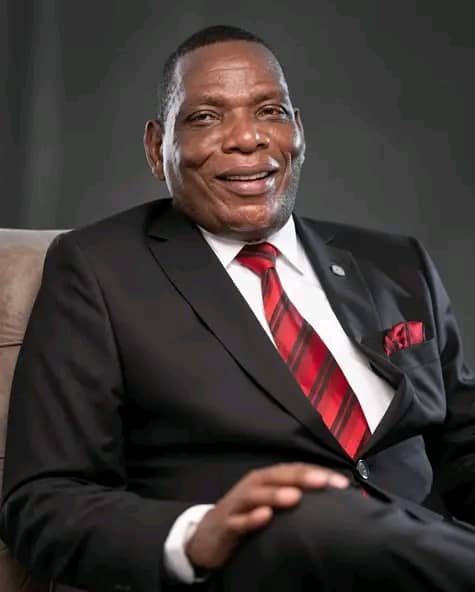


By MacPherson Tadziwa Mdalla
Last week, the Government of Malawi and the United Nations Development Programme (UNDP) brought together policymakers, development partners, civil society, and researchers to discuss the findings of the Malawi SDG Comprehensive Review 2026. While such events can easily become exercises in celebrating isolated achievements, this review served a more important purpose: it exposed the widening gap between implementation and impact. The central question confronting Malawi is no longer whether programmes are being implemented. Rather, it is whether those programmes are generating the scale of economic and social transformation required to achieve the Sustainable Development Goals (SDGs) by 2030 and realize the aspirations of Malawi 2063.
The review has arrived at a critical moment. With less than four years remaining until the SDG deadline, Malawi stands at a crossroads. The country has registered measurable progress in several social sectors, but the underlying drivers of poverty, vulnerability and economic stagnation remain intact. The result is a development paradox: Malawi is achieving improvements in selected indicators, yet millions of citizens continue to experience worsening economic hardship.
To be fair, the country has recorded notable gains in areas that matter. Access to safe water has expanded to about 89 percent of the population, skilled birth attendance has increased to 96 percent, and under-five mortality has fallen significantly over the past decade. Investments in public health, social services and community programmes have undoubtedly saved lives and improved wellbeing. Progress has also been registered in education, particularly in school enrolment and girls’ access to learning opportunities.

However, the SDGs were never intended to measure service delivery alone. They were designed to promote sustainable economic transformation that lifts people permanently out of poverty. It is on this front that Malawi continues to struggle.
The latest evidence reveals a sobering reality. Although the national poverty rate declined from 50.7 percent in 2019/20 to 47.3 percent in 2025, one in every two Malawians still lives below the national poverty line. In rural areas, where most Malawians reside, poverty remains above 52 percent. More concerning is the fact that progress in poverty reduction is occurring at a pace far slower than required to meet SDG 1 on ending poverty.
The explanation lies in Malawi’s economic structure. For years, the economy has relied heavily on low-productivity rain-fed agriculture, while industrialization and value addition have remained limited. The review notes that real GDP growth stood at just 1.9 percent in 2025, below the country’s population growth rate of approximately 2.6 percent. In practical terms, the economy is expanding more slowly than the number of people who depend on it. This means that even when growth occurs, average incomes stagnate and poverty reduction becomes extremely difficult.
This is the most important finding emerging from the review. Malawi’s development challenge is increasingly one of economic transformation rather than social service provision. The country has become successful at implementing projects but less successful at creating wealth.
Nowhere is this challenge more evident than in the labour market. According to the review, only 38.8 percent of the working-age population is employed, while over 91 percent of workers operate within the informal economy. Youth unemployment stands at 24.1 percent, and 40 percent of young people are neither employed, in education, nor receiving training. These figures should concern policymakers because Malawi’s demographic profile is overwhelmingly youthful. Every year thousands of young people enter a labour market that is simply not generating jobs at the necessary pace.
The implication is profound. Without large-scale investments in manufacturing, agro-processing, mining, tourism, digital industries and entrepreneurship, Malawi risks turning its demographic dividend into a demographic burden. Economic growth that does not create jobs is unlikely to reduce poverty, inequality, or social frustration.
Climate change has further complicated Malawi’s development journey. Over the past decade, Cyclone Idai, Cyclone Freddy, prolonged droughts, and El Niño-induced weather shocks have repeatedly eroded development gains. The World Bank estimates that climate shocks continue to undermine agricultural productivity, food security, and household incomes. Recent data show that over 84 percent of communities experienced some form of disaster during the past three years. Such repeated crises are not temporary interruptions; they are increasingly becoming defining features of Malawi’s development landscape.
The cost of climate vulnerability extends beyond agriculture. Every major disaster forces government to divert scarce resources from long-term development priorities towards emergency relief and reconstruction. Schools, roads, health facilities, and productive assets are repeatedly damaged, delaying progress on multiple SDGs simultaneously. Consequently, climate resilience can no longer be viewed as a sectoral issue. It has become a precondition for development itself.
Another emerging concern is the growing disconnect between improvements in human development indicators and actual living standards. Malawi’s Human Development Index remains among the lowest globally, and almost half of the population continues to experience multidimensional poverty despite years of investment in health and education. This suggests that gains in social sectors are not being sufficiently reinforced by economic opportunities capable of transforming livelihoods.
The alignment between the SDGs and Malawi 2063 therefore becomes critically important. Both frameworks emphasize wealth creation, industrialization, self-reliance, and resilience. Yet achieving these objectives requires a shift from consumption-driven development interventions towards productivity-enhancing investments. More resources must flow towards irrigation, commercial agriculture, energy generation, value addition, digital transformation, and export-oriented industries.
Equally important is domestic resource mobilization. Malawi cannot sustainably finance its development ambitions while remaining heavily dependent on external support. Expanding the tax base, curbing public sector inefficiencies, enhancing transparency in public expenditure, and creating a favorable environment for private sector investment must become urgent national priorities.
The Malawi SDG Comprehensive Review 2026 therefore delivers a mixed verdict. It confirms that progress is occurring and demonstrates that targeted interventions can produce results. Yet it also exposes a fundamental truth: social progress alone will not be enough to achieve the SDGs. Without faster economic growth, stronger job creation, greater resilience to climate shocks and deliberate structural transformation, many targets will remain beyond reach by 2030.
As the countdown to 2030 accelerates, Malawi faces an obvious choice. It can continue with incremental progress and risk falling short of both the SDGs and Malawi 2063, or it can embrace the bold reforms necessary to unlock inclusive growth and long-term prosperity. The evidence presented last week leaves little room for complacency. The foundations have been laid. What Malawi now needs is scale, urgency, and execution. The next four years will determine whether the SDGs become another missed opportunity or a springboard towards the prosperous nation envisioned in Malawi 2063.

Leave a Reply