

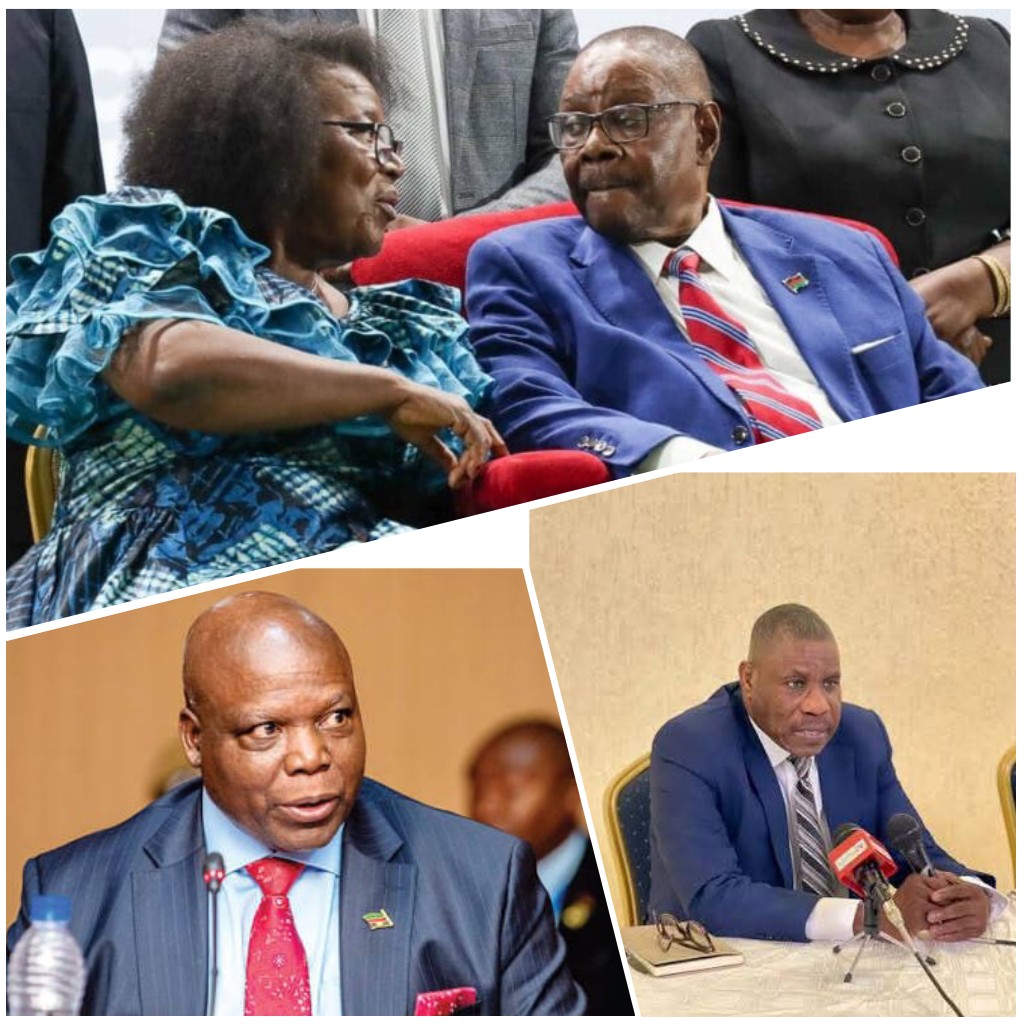

BLANTYRE-(MaraviPost)-President Arthur Peter Mutharika’s decision to delegate his role at the Nsipe memorial for the late Vice President Dr. Saulos Klaus Chilima to Minister of Education Bright Msaka has ignited a debate about the deliberate erosion of constitutional hierarchy in Malawi.
The memorial was intended as a moment of national unity after a tragedy that claimed the life of a former Vice President and eight others.
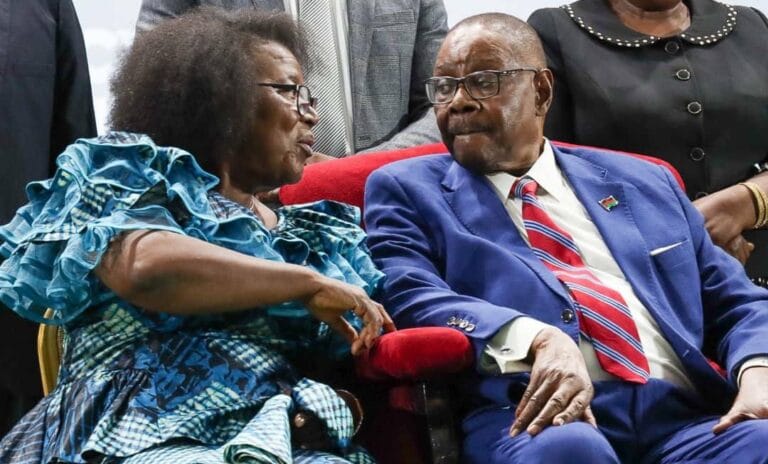
Vice President Dr. Jane Ansah was present at the function, yet she was required to stand in respect of a junior minister designated as guest of honour.
By convention and by the structure of Malawi’s executive, the Vice President outranks all Cabinet Ministers and stands as the most senior government official after the President.
In any government that respects its own constitutional architecture, Dr. Ansah would have represented the President or been recognized as the guest of honour herself.
Having a minister assume that role while the Vice President stood in deference created a visible rupture in the established order of precedence.
State House will likely argue that representation was assigned on the basis of portfolio relevance rather than rank.
That argument, if applied consistently, reduces the office of the Vice President to a conditional title that only matters when an event falls within her direct docket.
Such a reading strips the Vice Presidency of its constitutional function as the President’s principal deputy and first in the line of succession under Section 83.
The Democratic Progressive Party has used this justification before, sending sector ministers to represent the President even when the Vice President was in attendance.
But the repeated use of the argument does not make it constitutionally sound; it reveals a pattern of sidelining the office whenever it suits the presidency.
Optically, the arrangement at Nsipe looked like a demotion of the Vice Presidency in real time and in full view of the nation.
For supporters of Dr. Ansah, the move reads as a calculated attempt to undermine her authority and signal internal tensions within the DPP.
For critics, it confirms a longer-term strategy to render the Vice Presidency ceremonial and politically irrelevant ahead of the elections.
That is why the protocol breach has gained traction beyond the narrow confines of ceremonial rules and into the realm of political legitimacy.
The key question for public accountability is whether this reflects a deliberate shift in how the DPP understands the role of the Vice President.
The presidency must also explain what message it intends to send to citizens about respect for constitutional office-bearers when the second-highest office is visibly subordinated to a minister.
It matters whether this was standard practice for the DPP or a one-off decision made specifically for Nsipe, because patterns reveal intent.
It also matters how this affects party unity at an event meant to honour a figure who embodied national cohesion across political divides.
Delegating duties based on portfolio can be defensible in a functioning government where efficiency and expertise guide decision-making.
But protocol exists precisely to protect the dignity of institutions and to prevent the arbitrary diminishment of offices created by the Constitution.
When the Vice President is present and compelled to stand for a minister, the state creates unnecessary political noise that distracts from the purpose of the occasion.
The presidency owes the public clarity on whether this was a protocol oversight or a deliberate signal, because perception directly shapes trust in institutions.
President Mutharika’s record shows that this is not an isolated incident but part of a consistent pattern of bypassing Vice President Dr. Jane Ansah.
At John Chilembwe Day, Martyrs Day, Kamuzu Day, and even during the President’s trip to South Africa, the office of the Vice President was ignored in favour of ministers.
Section 89(6) of the Constitution allows delegation, but it does not permit the hollowing out of a constitutional office through selective exclusion.
Treating the Vice Presidency as optional rather than integral erodes the checks and hierarchy that structure the executive branch.
It sets a dangerous precedent that constitutional roles can be discarded when they become politically inconvenient for the presidency.
Calling this approach “efficiency” or “austerity” does not change the substance: it is unconstitutional sidelining that weakens institutional credibility.
The church, as the moral conscience of the nation, must speak against the normalization of disrespect toward constitutional offices.
Civil society organizations, tasked with defending democratic norms, have a duty to document and challenge this pattern before it becomes entrenched practice.
Citizens across Malawi, who finance these offices through their taxes, have a right to demand that their representatives be accorded the dignity their roles require.
The presidency must recognize that constitutional offices are not personal instruments to be elevated or diminished at will.
If Dr. Ansah was deemed fit to be a running mate, she is fit to be treated as a running mate, not as an accessory to be ignored.
If the presidency no longer values the role of the Vice President, it should state that position openly rather than eroding it through silent humiliation.
What occurred at Nsipe is not a minor breach of etiquette; it is a symptom of a deeper disregard for constitutional order.
The dignity of the Vice Presidency must be restored, not because of the individual who holds it, but because the Constitution and the public interest demand it.

Comments
One response to “Mutharika’s protocol breach at Nsipe exposes a pattern of constitutional erosion”
seeing trouble where none exists