
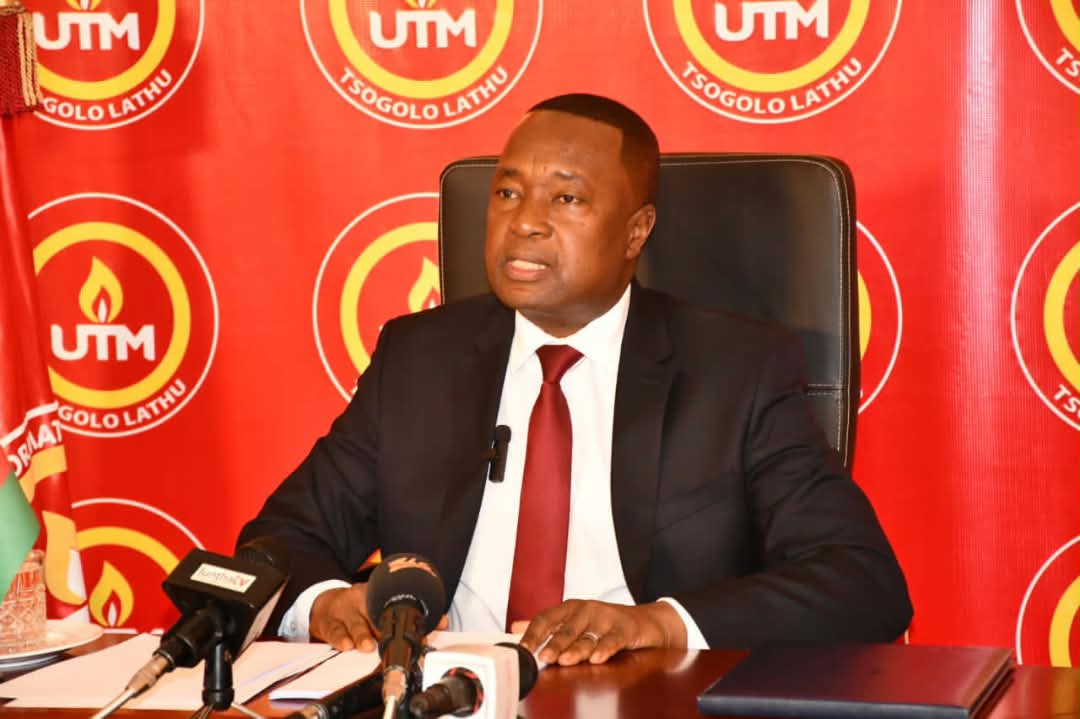

BLANTYRE-(MaraviPost) United Transformation Movement (UTM) president Dalitso Kabambe says the Democratic Progressive Party (DPP)-led government has fallen short of many of the expectations Malawians had when they returned the party to power a year ago, citing continued economic hardships, foreign exchange shortages, unemployment and concerns over governance.
Kabambe made the remarks on Wednesday as the country marked one year since President Peter Mutharika and the DPP returned to government following the September 16, 2025 presidential election.
He said Malawians voted expecting lower prices of food and fertiliser, more employment opportunities, better access to medicines, reliable electricity and fuel, as well as improved transport services.
According to Kabambe, the first year of an administration is important because it gives citizens an indication of the direction government intends to take on issues such as public appointments, corruption, accountability, transparency and work ethics.
The UTM leader acknowledged that the DPP inherited several challenges but argued that Malawians should by now be seeing a clear direction in how the government is addressing them.
Kabambe criticised the government’s economic policies, including its approach to borrowing, fiscal and monetary policy and foreign exchange management.
He said the high cost of living remained a major concern, with the prices of food, fuel, transport, education, water and electricity continue to put pressure on households and businesses.
The former Reserve Bank of Malawi (RBM) Governor also said foreign exchange shortages are still affecting access to fuel, fertiliser, medicines and raw materials needed by businesses.
On public debt,Kabambe said the DPP inherited debt of about K24 trillion and warned that it will rise beyond K40 trillion if action is not taken.
Kabambe further accused government of failing to adequately address corruption, citing alleged irregularities involving Blantyre Water Board(BWB), Southern Region Water Board(SRWB), Electricity Supply Corporation of Malawi (ESCOM), National Oil Company of Malawi (NOCMA( and maize imports.
He cited alleged transactions involving billions of kwacha, including more than K20 billion at BWB, K4.7 billion at SRWB, K11.8 billion at ESCOM and K1 billion in NOCMA fuel contracts.
The economist also alleged that K38.8 billion was lost through maize import transactions involving Zambia.
Kabambe said corruption deprives Malawians of resources that can otherwise be used to provide essential services such as medicines, roads and water.
On unemployment and poverty, he said many young people are struggling to find jobs while businesses are facing rising operating costs.
He also accused the DPP of nepotism and tribalism in public appointments, alleging that some professionals are being replaced on regional grounds.
Kabambe further raised concerns over food insecurity, citing figures he attributed to government reports showing that 2.3 million people faced food insecurity in 2025 and about two million in 2026.
He warned that the figure can rise to five million in 2027 if the situation is not addressed.
On governance, Kabambe questioned the treatment of Vice President Jane Ansah, alleging that she is being left out of Cabinet meetings and some official assignments.
He also raised concerns over what he described as interference in the office of the Speaker of Parliament.
Kabambe said Malawians should remain free to question those in authority, arguing that criticism and accountability are necessary in a democracy.
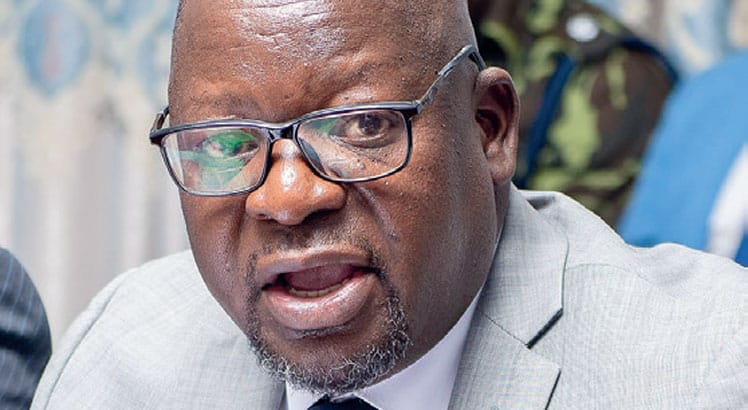
But Information Minister and government spokesperson Shadric Namalomba defended the government’s record, saying the DPP administration has made progress during its first year in office.
Namalomba said government continues to implement the programme for which Malawians elected it.
He said the situation has improved from what the country experienced before the September 2025 elections, when people spent long hours looking for commodities such as fuel, sugar and cement.
Namalomba also pointed to maize prices and free secondary education as some of the administration’s achievements.
The return of the DPP to power came five years after Mutharika left office following the June 2020 presidential election, which was won by Lazarus Chakwera of the Malawi Congress Party(MCP)-led Tonse Alliance.
The 2020 election followed the Constitutional Court’s annulment of the 2019 presidential results and the subsequent Supreme Court confirmation of the fresh election process.
Mutharika previously served as president from 2014 to 2020.

Leave a Reply